





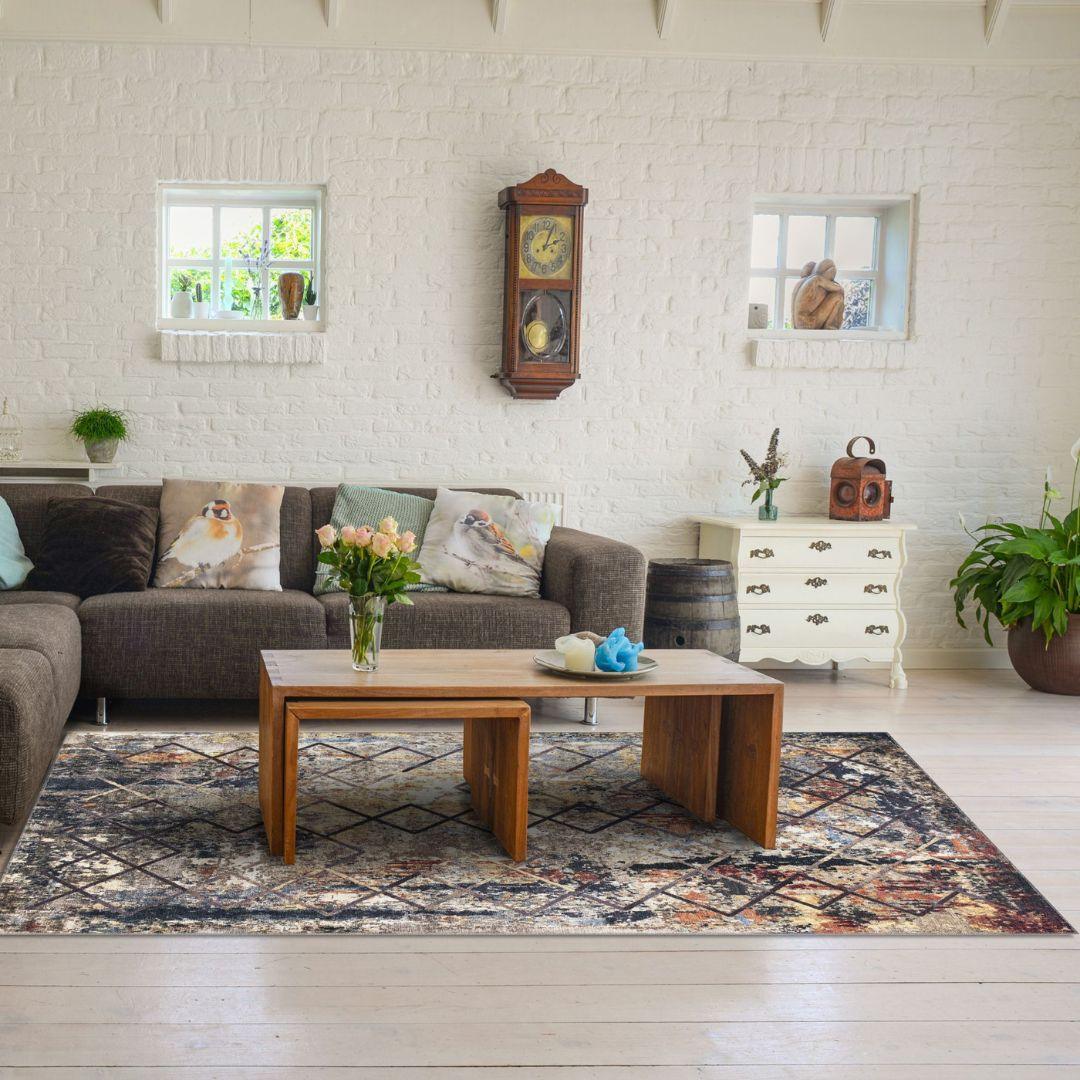

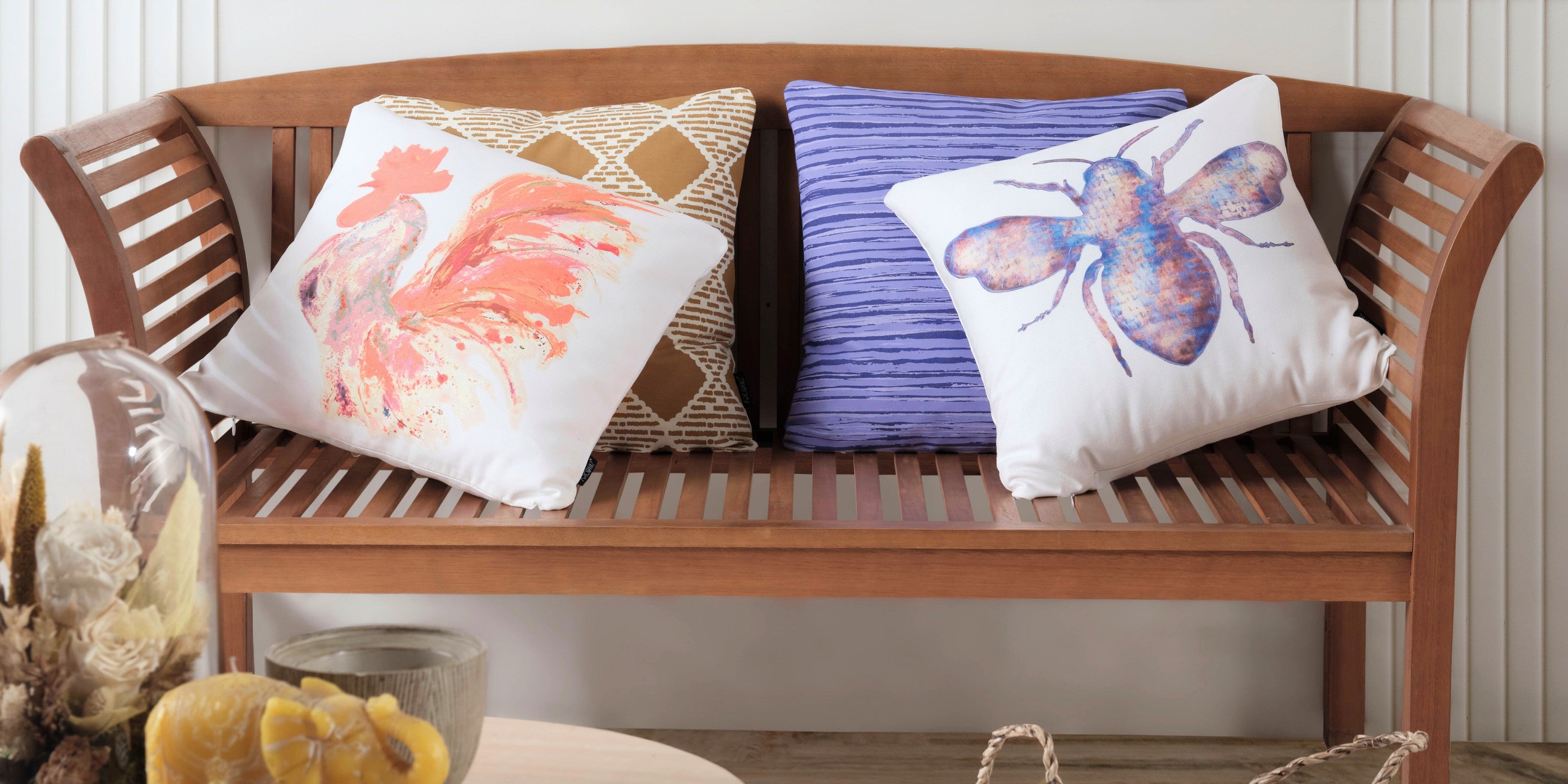

The main rug patterns are geometric, medallion, stripe, solid, floral, abstract and tribal. Geometric and stripe patterns add structure and hide everyday wear well, medallions suit traditional rooms, solids keep a space calm, and abstract designs add movement. Choose by how busy your room already is, not only by how the rug looks in a photo.
The 7 main rug patterns at a glance
| Pattern | What it looks like | Best for | Hides everyday wear? |
|---|---|---|---|
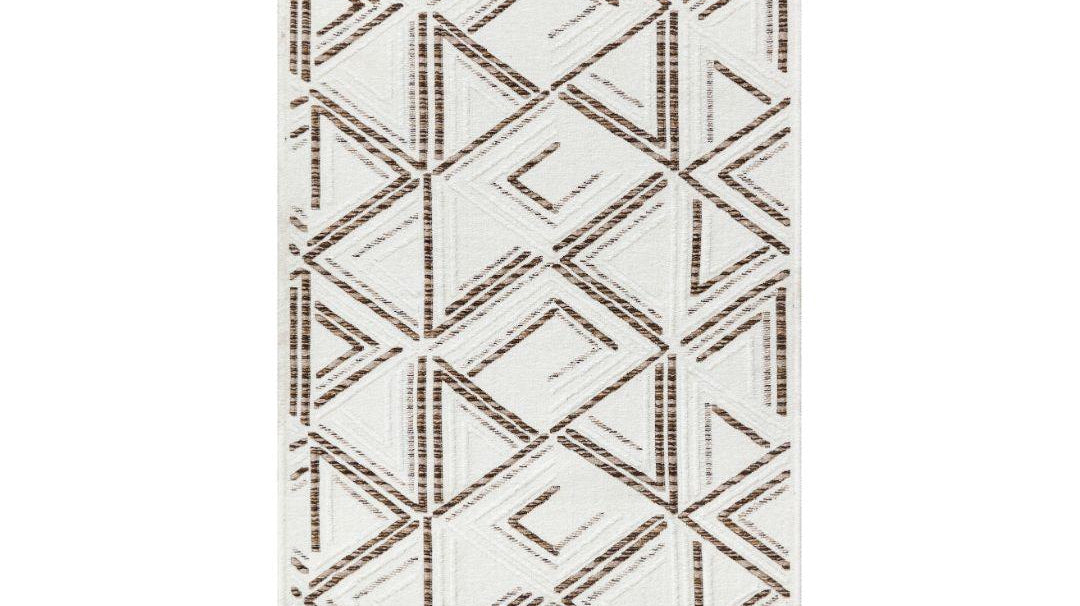
| Geometric | Checks, grids, diamonds, chevrons | Modern and transitional rooms | Very well |
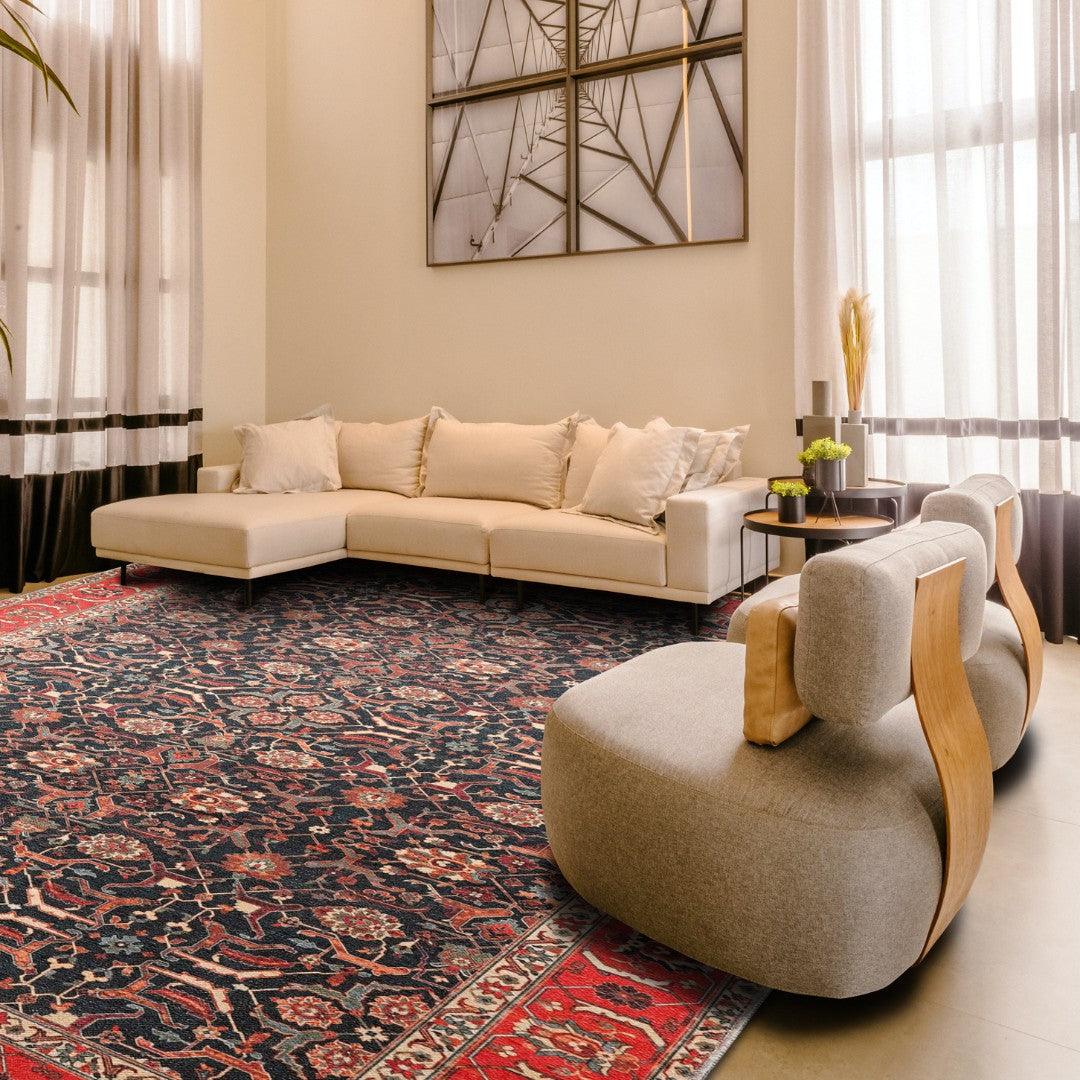
| Medallion | A central motif with a border | Living and dining rooms | Well |
| Stripe | Parallel lines of different widths | Hallways, kitchens, entryways | Well |
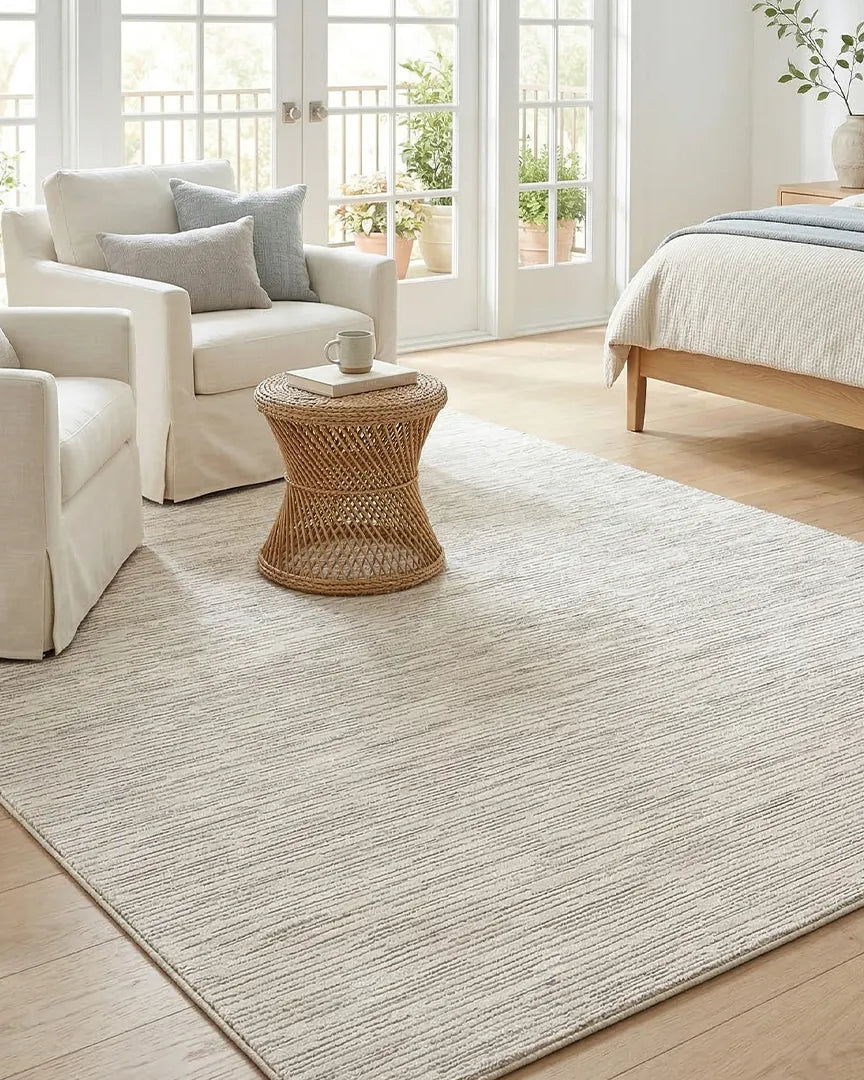
| Solid | One colour, sometimes textured | Busy rooms, minimalist spaces | Depends on the shade |
| Floral | Botanical or garden motifs | Bedrooms, cottage styles | Moderately |
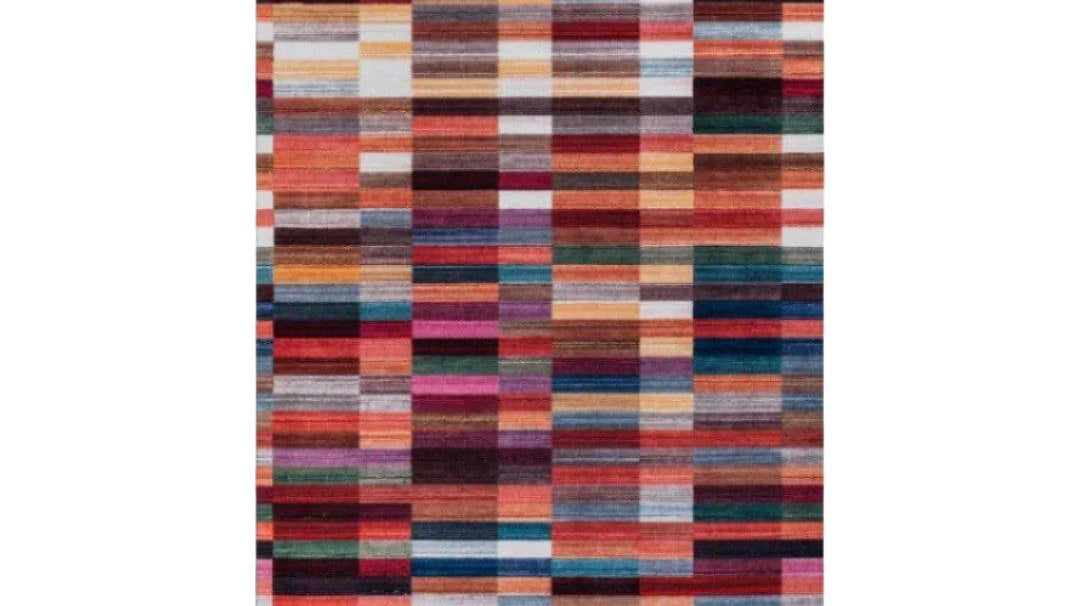
| Abstract | Brush-stroke and freeform shapes | Plain, contemporary rooms | Well |
| Tribal | Bold, repeated woven motifs | Boho and global-style rooms | Very well |
Geometric rugs: checks, grids and chevrons
Geometric is the most flexible pattern family, which is why it is also the most popular. A small check reads almost like a texture from across the room, while a larger diamond or chevron becomes a design feature. Because the repeat is regular, the eye does not land on one spot, so crumbs, footprints and the odd pet hair are hard to pick out.
Geometric rugs also pair easily with other patterns. A fine check sits comfortably under a striped sofa or beside floral curtains because the scale is small and the colours are controlled. If you like the look, start with our geometric washable rugs.

Medallion and traditional rugs
A medallion rug has a central motif, often framed by a border, and it is the classic look most people picture when they think of a Persian or oriental rug. It works best where the rug is the focal point: under a dining table, in front of a fireplace, or in a living room with plain walls and simple furniture.
The border is useful in practice. It frames the room, and on a hard floor it gives you a clean edge to line up against furniture. You can find the style in our traditional and classic rugs and, with a faded, lived-in finish, in the vintage and distressed range.

Stripe rugs
Stripes add direction. Run them along a hallway and the space feels longer; run them across a kitchen and it feels wider. That is why stripes are such a common choice for runners. Narrow stripes look calm and tailored, while wide stripes feel casual and coastal.
One practical point: stripes show it when a rug is laid slightly crooked, so measure twice when you place one. If you are choosing for a long, narrow space, our guide to washable runner rugs for hallways and kitchens covers sizes in detail.

Solid and textured rugs
A solid rug is the safest choice when your room already has bold wallpaper, a patterned sofa or lots of art. It lets everything else speak. Texture does the work that pattern would otherwise do, so a subtle woven surface looks richer than a flat block of colour.
The trade-off is that a solid shows what a pattern would hide. Very light solids pick up dark pet hair and footprints; very dark solids show lint and pale hair. Mid-tones such as taupe, slate and charcoal are the forgiving middle ground. Browse the minimalist and textured rugs if this is your direction.
Floral, abstract and tribal patterns
Floral rugs soften a room and suit bedrooms well, though they can feel dated if the scale is large and the colours are strong. Abstract rugs, with brush-stroke or freeform shapes, work in plain contemporary rooms where the rug is the one art piece on the floor. Tribal patterns use repeated woven motifs and add warmth to boho and global-style spaces. See the abstract rugs and tribal rugs for examples.
How to choose a rug pattern in 4 steps
- Look at what is already in the room. Count the patterns on the sofa, curtains, cushions and walls. If there are already two or three, choose a quiet rug.
- Pick the pattern family. Geometric or stripe for structure, medallion for tradition, solid for calm, abstract for movement.
- Match the scale to the room. Small repeats work in small rooms; larger motifs need space to read properly. Not sure of the size? Use our area rug sizes guide.
- Think about wear. Mid-tone, multicolour patterns hide dirt and pet hair longer than pale solids.
Does pattern matter for a washable rug?
It matters more than people expect. A washable rug is meant to be cleaned in the machine, but you still want to wait longer between washes. A patterned rug buys you that time, because it camouflages light marks until the next wash. Pattern does not change how the rug is washed, so always follow the care instructions on the product page. If colour fading is a worry, our post on whether washable rugs fade explains what to expect.
For households with animals, the same logic applies: a busy pattern in a mid-tone is the most forgiving. Our guide to the best washable rugs for pets goes deeper on that. Choosing colour rather than pattern? Read how to choose a rug colour based on your room's mood. And for the full buying checklist, see how to choose a washable rug.
Ready to browse? The full range lives in our washable rugs collection, and if you are still weighing the idea, here is whether machine washable rugs are worth it.
Written by the Arconiz team. We work directly with Turkish manufacturers, with no middleman, and we wash-test the rugs we sell.