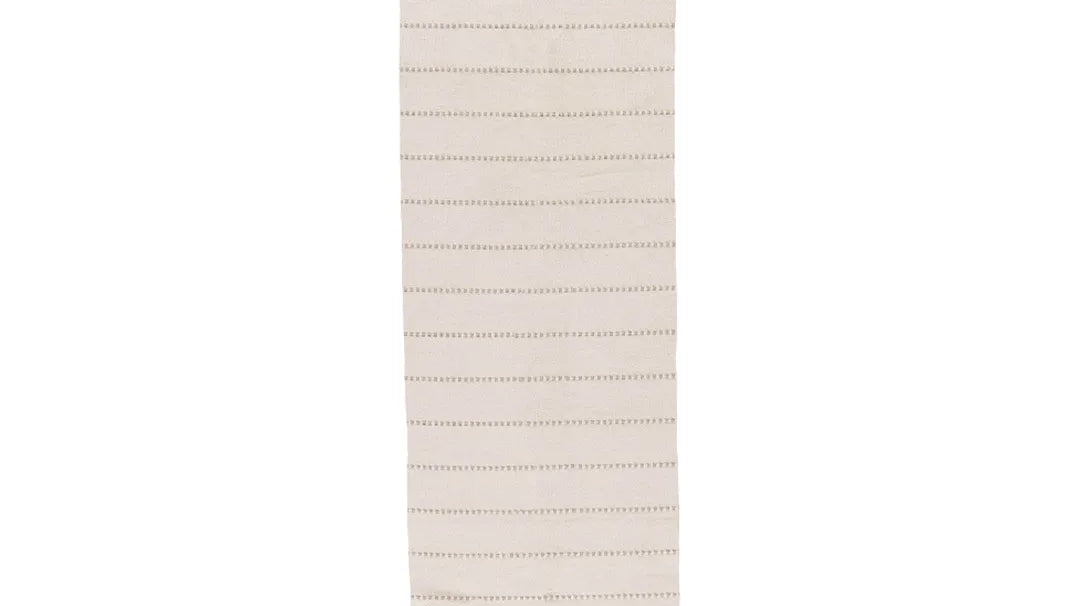

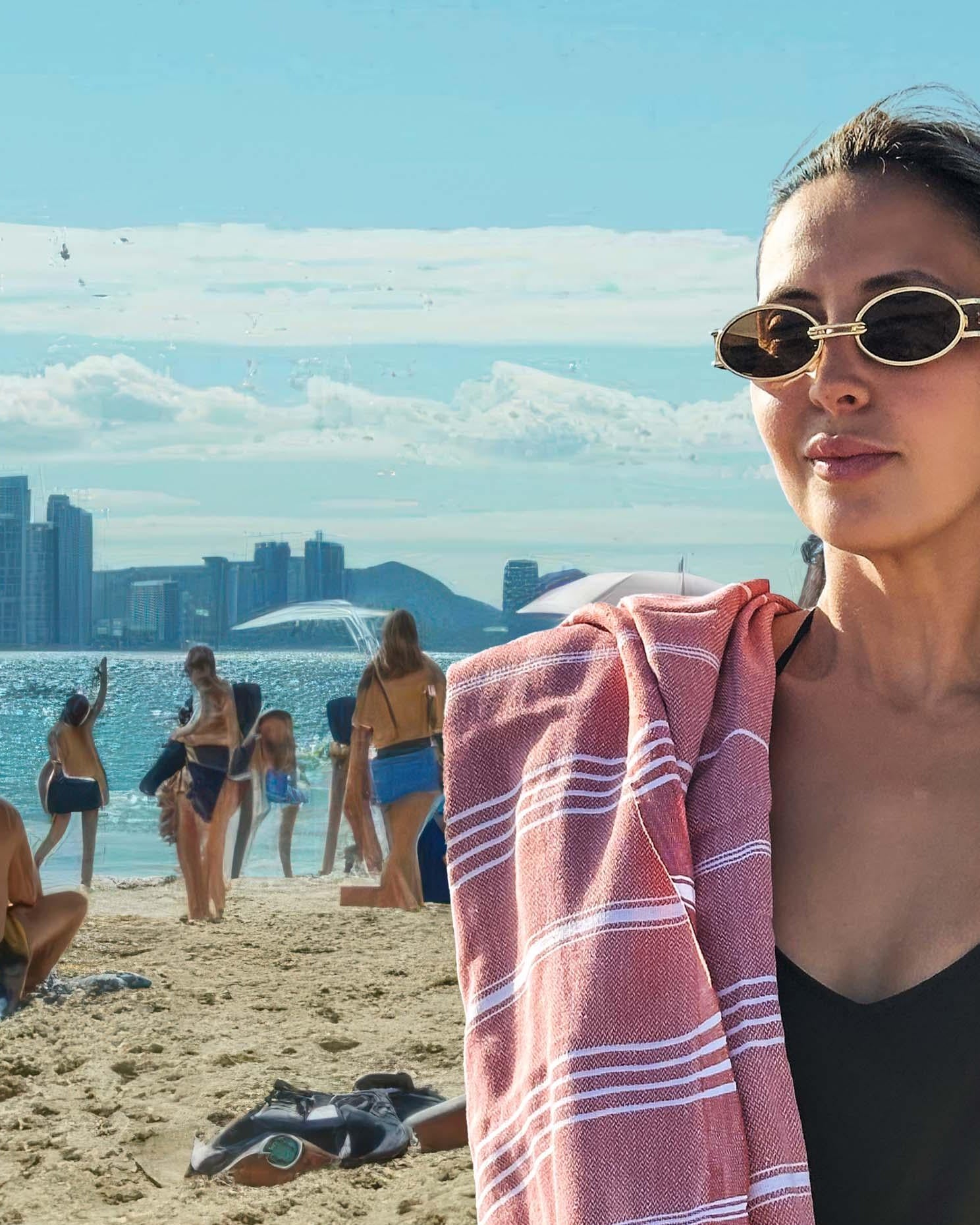





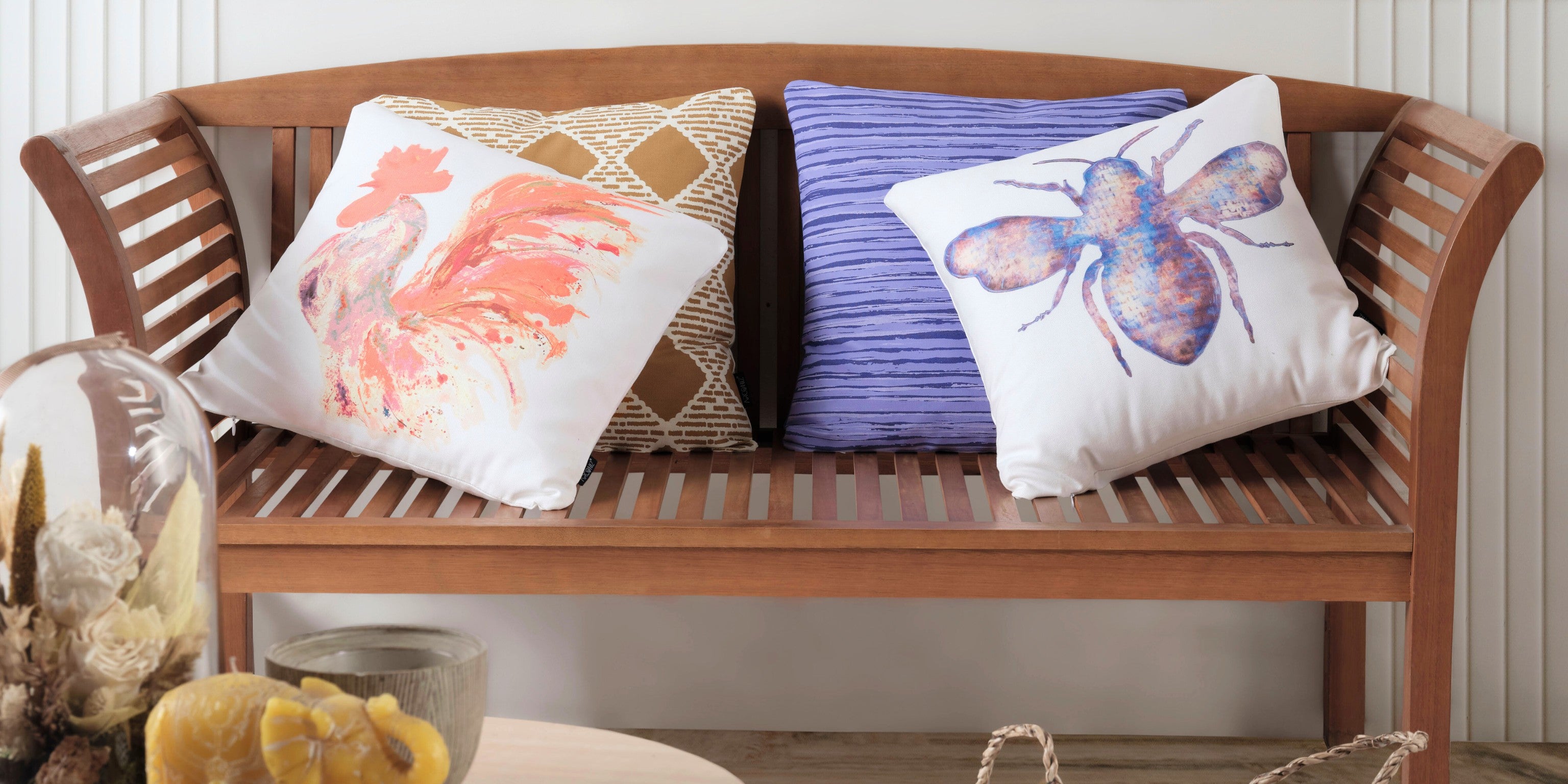

A Turkish beach towel is a flat-woven towel made from long-staple Turkish cotton. Instead of the raised loops of a normal terry towel, it has a smooth, tightly woven surface — often with fringed ends. That single difference is why it dries faster, packs down to roughly half the bulk, sheds sand instead of trapping it, and gets softer every time you wash it.
What makes it "Turkish"?
Two things: the cotton and the weave.
Turkish cotton is a long-staple cotton, meaning the individual fibres are longer. Longer fibres spin into stronger, smoother yarn that produces fewer loose ends — so the fabric is durable, absorbent, and doesn't go fluffy and shed the way short-staple cotton does.
The weave is the other half. Turkish towels are woven flat on a loom rather than looped, a technique that goes back centuries to the Turkish hammam (bath house). The result is a towel that behaves completely differently from terry.

Turkish beach towel vs. a regular terry towel
| Turkish (flat weave) | Regular terry | |
|---|---|---|
| Sand | Shakes off | Lodges in the loops |
| Drying time | Fast | Slow, stays damp |
| Packed bulk | About half | Bulky |
| Over time | Softens | Can stiffen |
| Feel | Smooth, light | Plush, cushioned |
To be fair to terry: it is more cushioned to sit on. If plushness is what you want above all else, terry wins. For everything else about a beach day — carrying it, drying it, getting the sand off — Turkish wins.
Are Turkish beach towels actually absorbent?
This is the most common objection, and it is fair — a thin towel looks like it shouldn't work. But absorbency comes from the cotton fibre, not the thickness. Long-staple Turkish cotton absorbs as much water as terry; it simply holds less air, which is why it feels thinner and dries much faster.
One honest caveat: a brand-new Turkish towel is at its least absorbent. It needs a wash or two for the fibres to open up. If your first use feels underwhelming, that's normal — wash it and try again.
Peshtemal, fouta, hammam — what's the difference?
Mostly regional naming. Peshtemal (or pestemal) is the Turkish word, fouta is the North African term, and hammam towel refers to its origin in the Turkish bath. They all describe the same flat-woven cotton towel. Don't overthink it.

What to look for when buying one
- 100% Turkish cotton — not a blend, not "Turkish-style".
- Printed dimensions — oversized should mean 38–40 x 70–71 in.
- OEKO-TEX certified — tested for harmful substances.
- Sensible price — these do not need to cost $45. Ours start at $15.99 because we buy direct from our manufacturers in Turkey, with no middleman.
Browse our Turkish beach towels, check the beach towel size guide to pick a size, or read about oversized and giant beach towels.
Written by the Arconiz team. Arconiz works directly with Turkish manufacturers to bring quality towels and home textiles to your door without the middleman. We test what we sell.