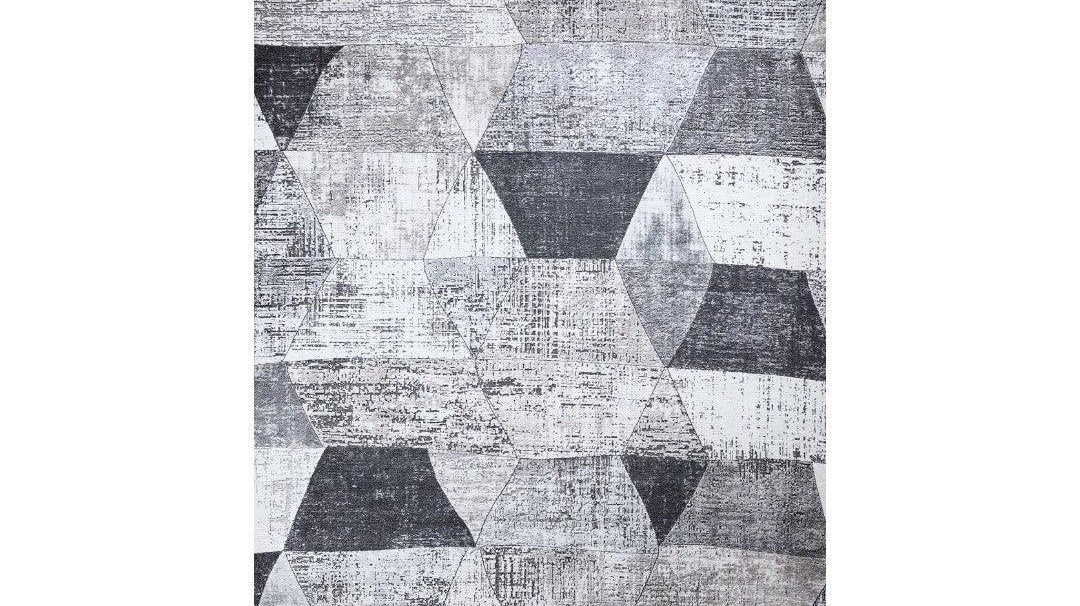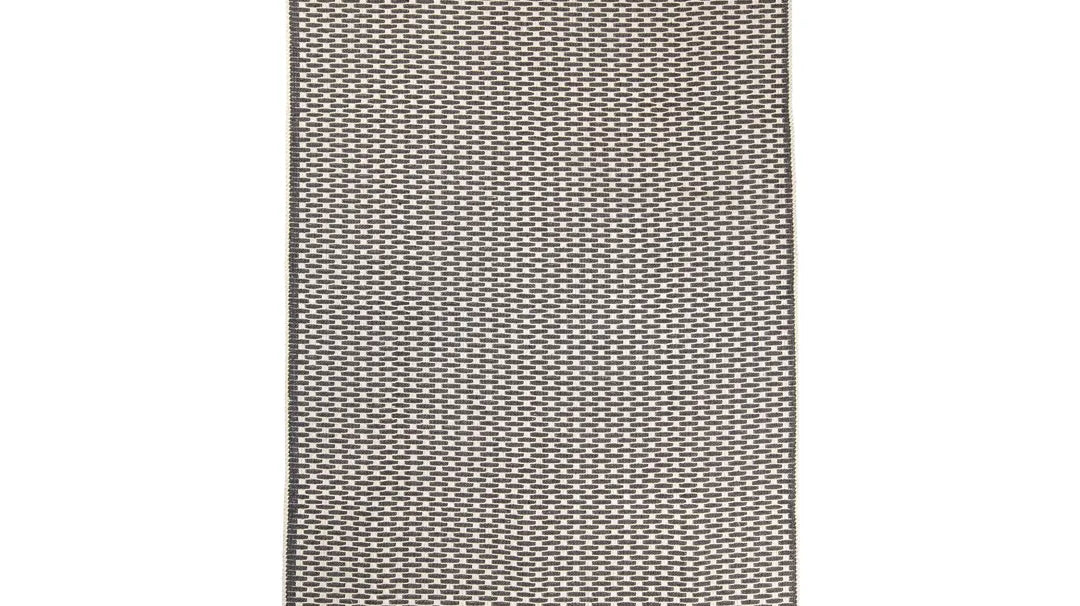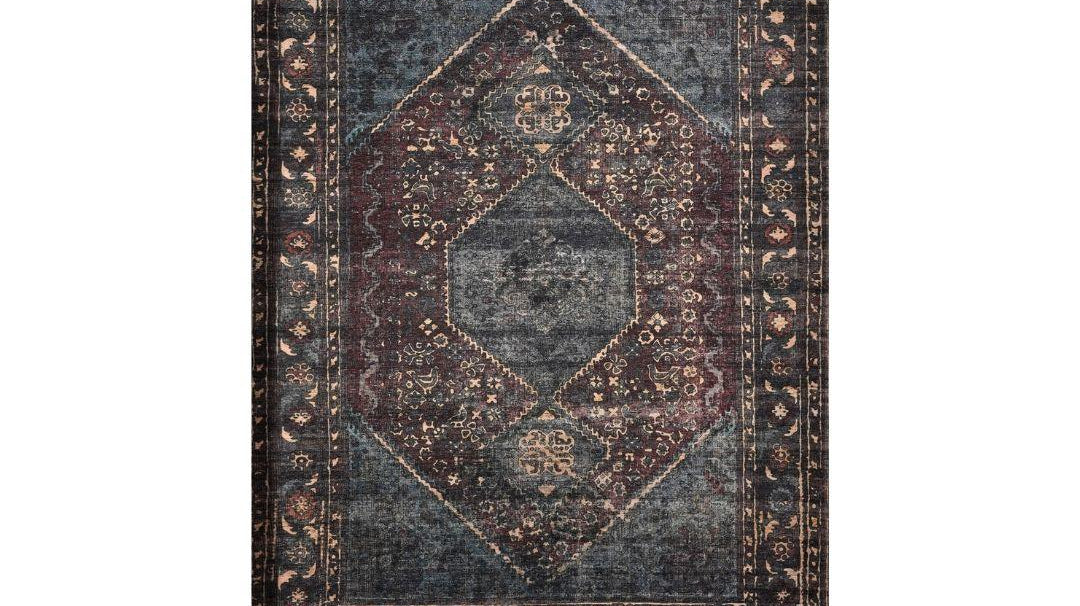









Yes, most machine-made low-pile rugs can be cut with a sharp utility knife — but the cut edge will fray unless you seal and bind it, the change is permanent, and it voids any return or warranty. Two kinds should never be cut: hand-knotted rugs, which unravel from the foundation, and washable rugs with a bonded non-slip backing, which delaminate in the wash afterwards.
Which rugs can be cut, and which cannot
The answer depends entirely on how the rug is held together. Fold a corner back and look at the underside before you decide anything.
| Rug type | Safe to cut? | What happens |
|---|---|---|
| Machine-woven, low pile | Yes, with binding | Cuts cleanly; edge must be sealed and bound or it unravels |
| Tufted with a latex backing | Yes, with binding | Tufts pull out along the edge until it is bound |
| Hand-knotted or hand-woven kilim | No | Cutting the warp releases the whole structure; needs a specialist to reduce |
| Washable rug with bonded backing | No | The backing peels away from the cut edge in the wash |
| Jute, sisal or seagrass | Difficult | Thick natural cords spring apart; needs professional binding |
| Shag or high pile | Technically yes | The cut line is visible as a blunt ridge through the pile |
| Broadloom carpet remnant | Yes | Designed to be cut and bound; this is the normal way to make a room-size rug |

What actually happens to a cut edge
A finished rug edge is not just a cut line. It is a selvedge — either woven back into itself or serged with heavy thread — and it is doing structural work. Cut through it and three things follow.
The weave starts to walk. Weft threads at a raw edge have nothing holding them, so each vacuum pass and each foot takes a little more. On a low-pile rug this can be slow; on a tufted rug it is fast.
The edge curls. Rug backings are under slight tension. Remove the bound edge and the new border tends to lift, which is both a trip hazard and the fastest way to wear through a corner.
The design stops mid-sentence. This is the one people regret most. Most rugs are composed — a border, a centred medallion, a repeat that resolves at the ends. Cut 18 inches off one side and the rug reads as damaged rather than smaller, even if the edge is beautifully bound.
None of that means don't do it. It means the result is a modified rug, not a smaller rug.
Why you should not cut a machine washable rug
This one is worth its own section, because washable rugs look like the easiest thing in the world to cut. They are thin, flexible and low pile, and a blade goes through one like paper.
The problem is the wash. A washable rug's non-slip backing is bonded to the face of the rug, and that bond is designed to survive agitation, spinning and repeated wetting with the factory edge intact. A raw cut edge gives water and mechanical stress somewhere to get in. What typically happens is that the backing begins peeling back from the cut side after two or three cycles, and once it lifts it does not re-adhere.
So you do not just end up with a fraying edge. You end up with a rug that has lost the single feature you bought it for. If you need a washable rug in a size the standard range does not cover, buying the next size down and leaving a wider border of floor is a genuinely better outcome — our area rug sizes guide covers what each standard size actually fits.

Four things to try before cutting
- Tuck it further under the furniture. A rug does not need to be fully visible. Sliding a 9x12 two feet further under a sofa reads as a deliberate layout, not a mistake, and costs nothing.
- Drop to the next standard size. The gap between an 8x10 and a 5x7 feels enormous on paper and much less so on a floor. In most rooms a slightly small rug looks intentional; a cut-down rug looks cut down.
- Use two runners instead. For long, narrow or L-shaped spaces — galley kitchens, hallways with a turn, a bed with a wall on one side — two runners often solve the shape better than any rectangle. See what a 2x6 runner rug is best for.
- Layer instead of trimming. If the issue is that a rug is too small rather than too big, a larger neutral base underneath fixes it and adds texture. If it is too big, layering a smaller rug on top can redirect the eye away from the awkward overhang.
If you are unsure which size actually belongs in the room, start with what size rug for a living room — most cutting questions come from buying one size too big in the first place.
If you are going ahead: how to cut and bind
- Confirm the construction. Fold a corner back. Machine-woven or tufted with a stable backing, proceed. Hand-knotted or bonded washable backing, stop.
- Mark the line on the back. Rug face down, measure twice, chalk the line against a long straightedge. Cutting from the back gives a cleaner edge.
- Seal before you cut. Run latex seam sealer or fabric glue along both sides of the line and let it dry fully. This is the step people skip and regret.
- Cut with a fresh blade. Utility knife against a metal straightedge, several shallow passes rather than one deep one. Scissors crush the pile and wander.
- Bind the new edge. Cotton or canvas binding tape with a strong fabric adhesive, or take it to a carpet shop for machine serging. Serging costs more and looks far better.
- Weight it for 24 hours so the binding cures flat instead of curling.
Expect an afternoon of work, and expect to need the rug flat and relaxed first — cutting a rug that is still curling from the box gives you a crooked line. How to flatten a new rug covers that.
When cutting is genuinely the right call
There are cases where we would cut without hesitating. A rug with irreversible water damage or a burn at one end, where trimming rescues a usable 4x6 from a ruined 8x10. A broadloom remnant, which is meant to be cut. A cheap synthetic rug in a rental where the alternative is throwing it out. And offcuts — a bound strip from a trimmed rug makes a decent door mat or a landing pad in front of a sink.
The test is simple: are you cutting to rescue a rug, or to force a rug into a room it was never the right size for? The first is resourceful. The second usually ends with a replacement six months later.
The Arconiz angle
We work directly with the mills in Turkey that weave our rugs, with no middleman in between, and we would rather talk someone into the right size than sell them a rug they intend to cut. Practically every design in our washable range runs across 2x3, 2x6, 3x5, 5x7 and 8x10, with round options on some patterns — which means the awkward-room problem is usually a sizing problem with a stocked answer.
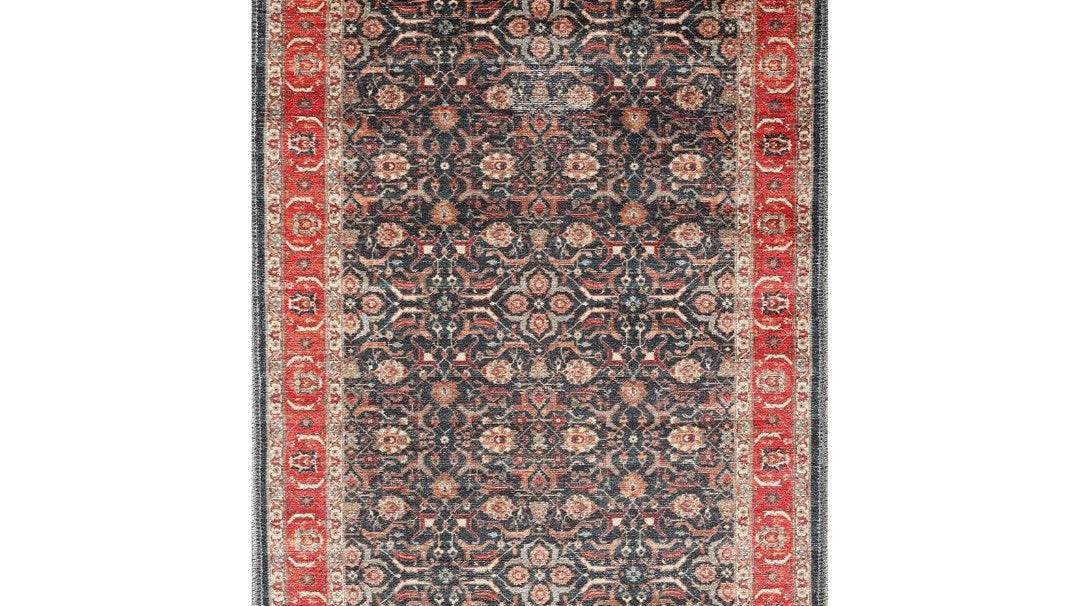
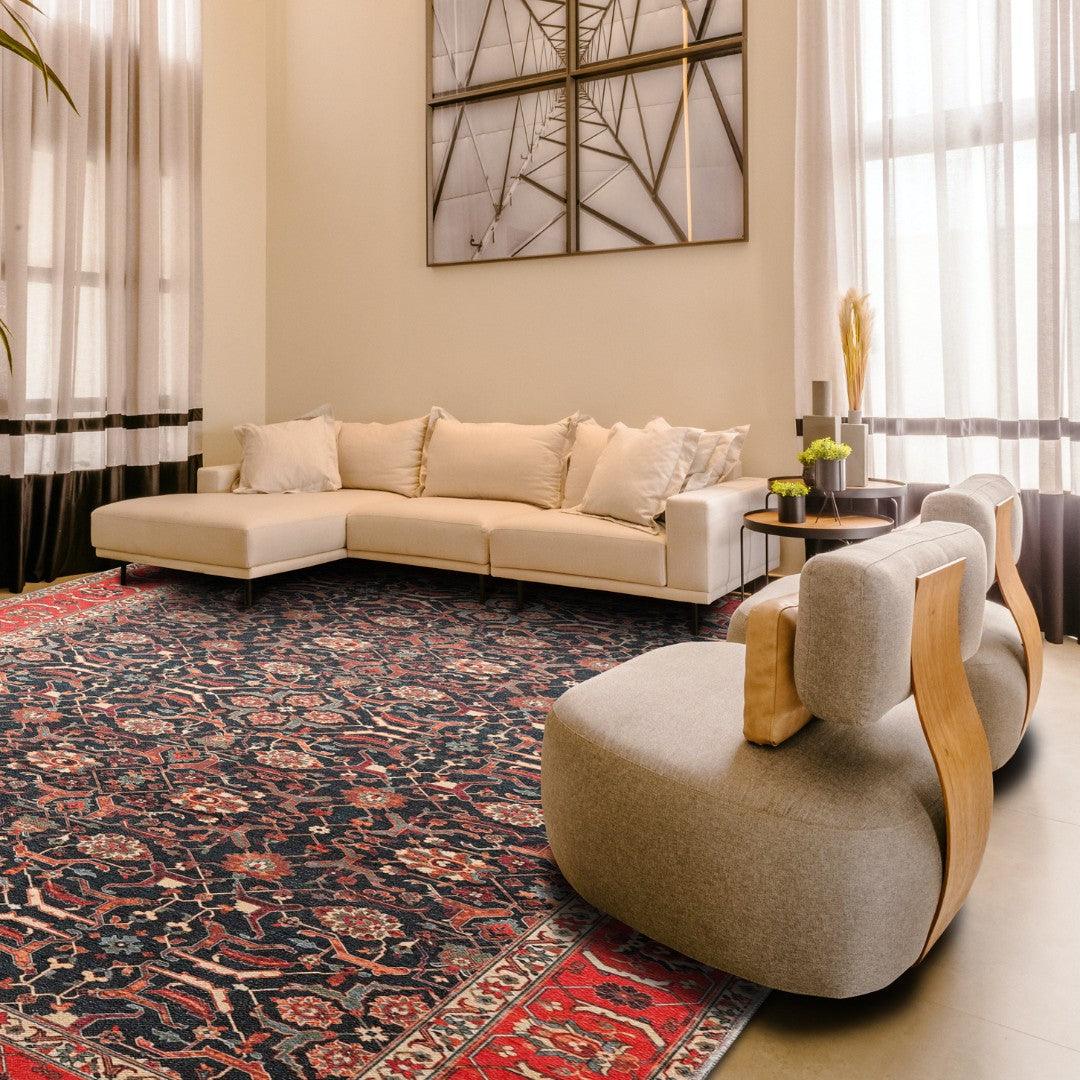
If you are between sizes, browse by dimension rather than by design: the runner rugs for narrow spaces, 3x5 and 5x7 for small and mid-size rooms, and 8x10 washable rugs for open-plan living. The blue and red decorative border rug and the burgundy multicolor rug are both stocked across the range, or see everything in our machine washable rug collection.
And if the deeper question is whether a washable rug is the right format at all, are machine washable rugs worth it is our honest take.
Written by the Arconiz team. We source handwoven and machine washable rugs directly from manufacturers in Turkey and test every care instruction we publish on our own stock.