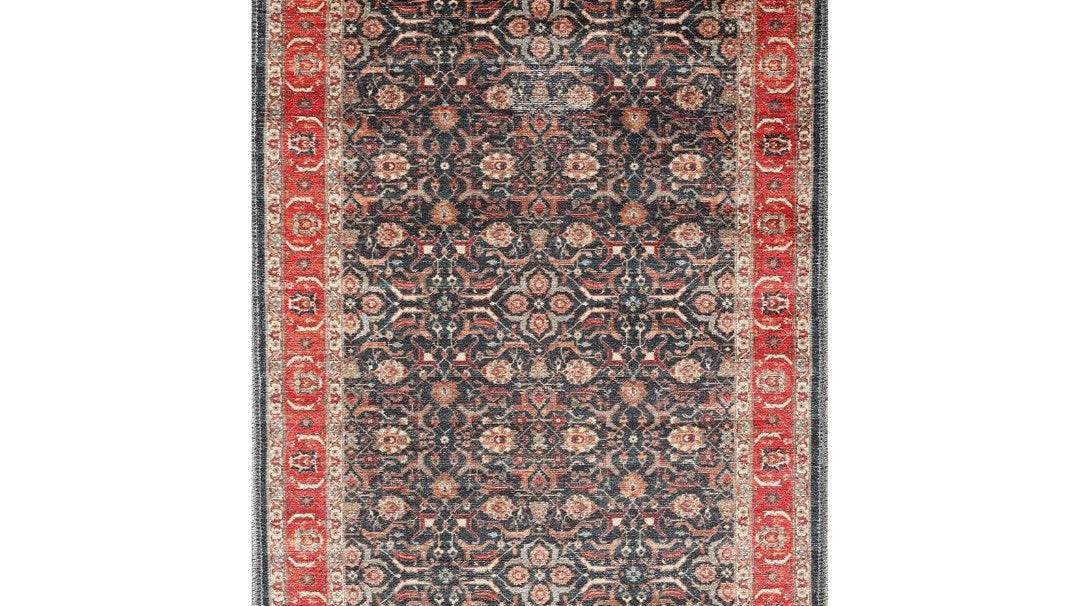

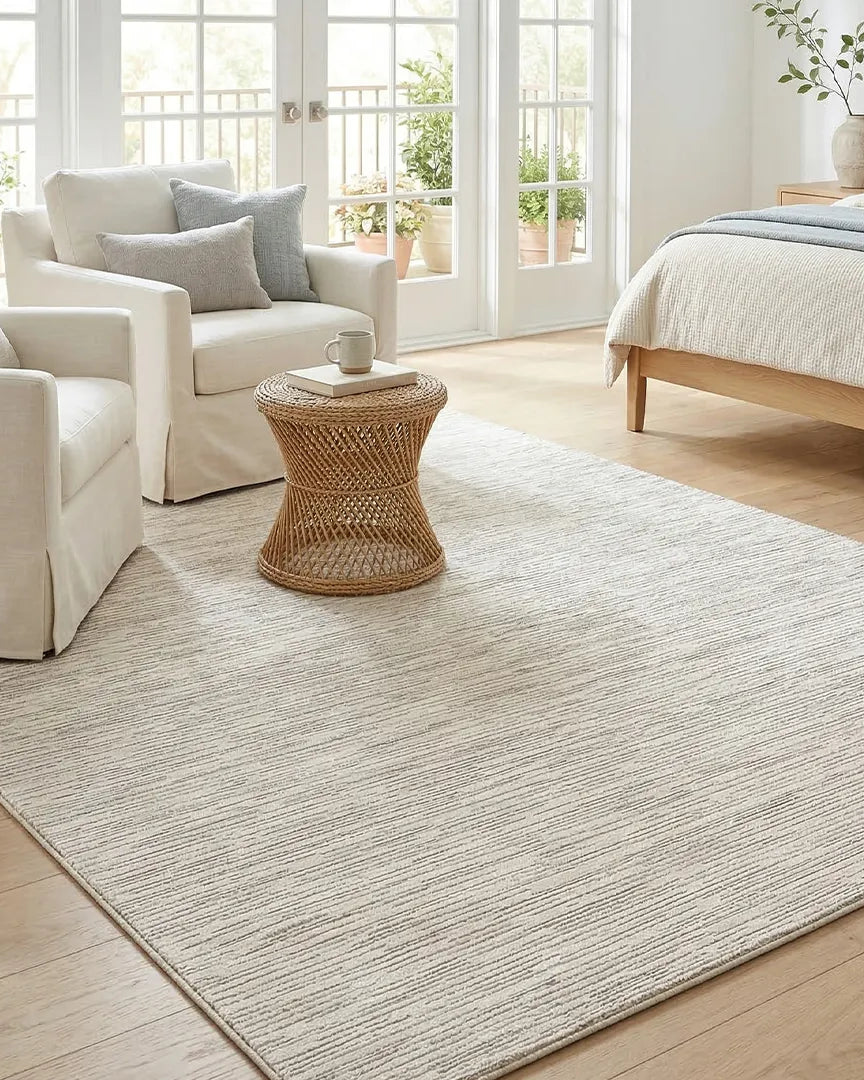



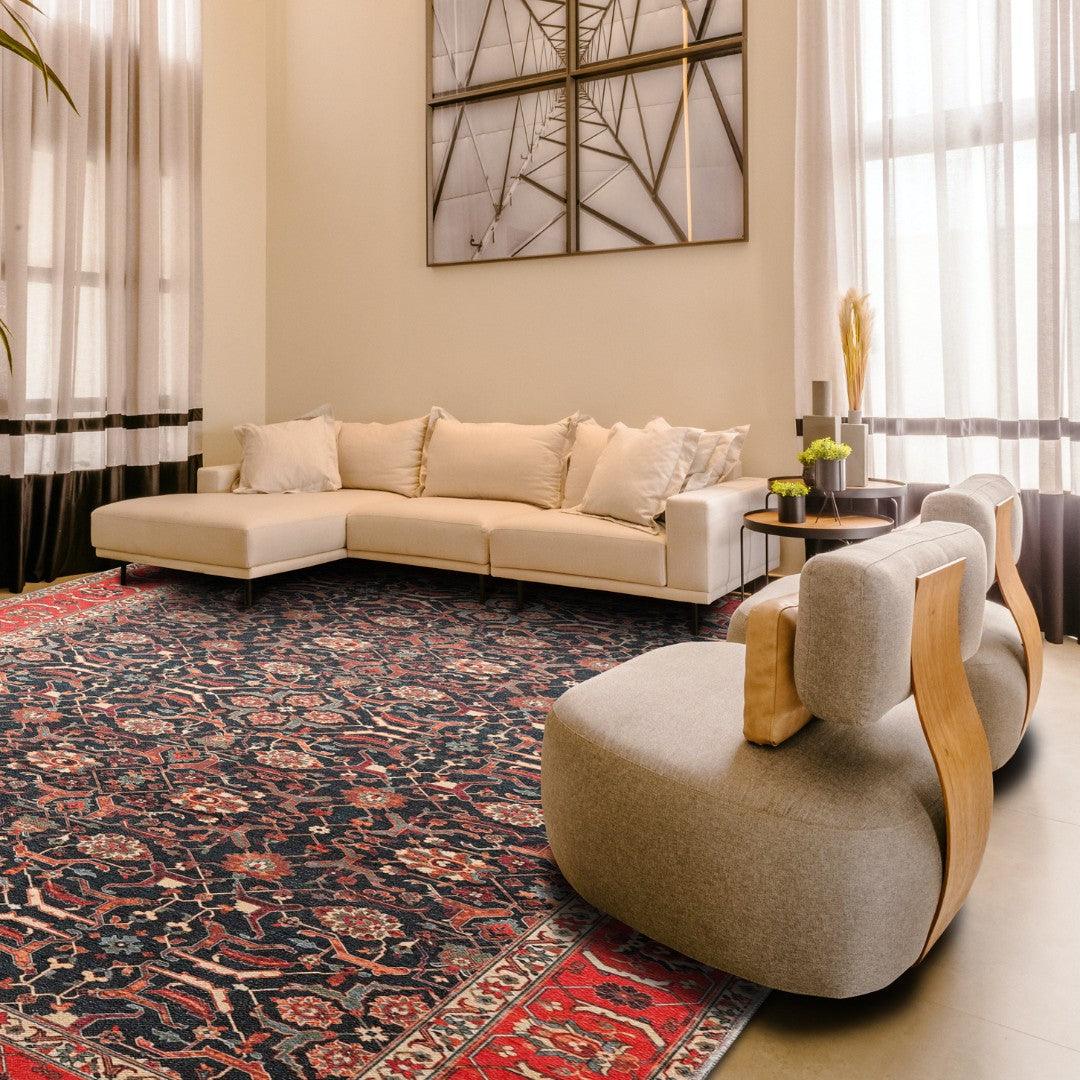


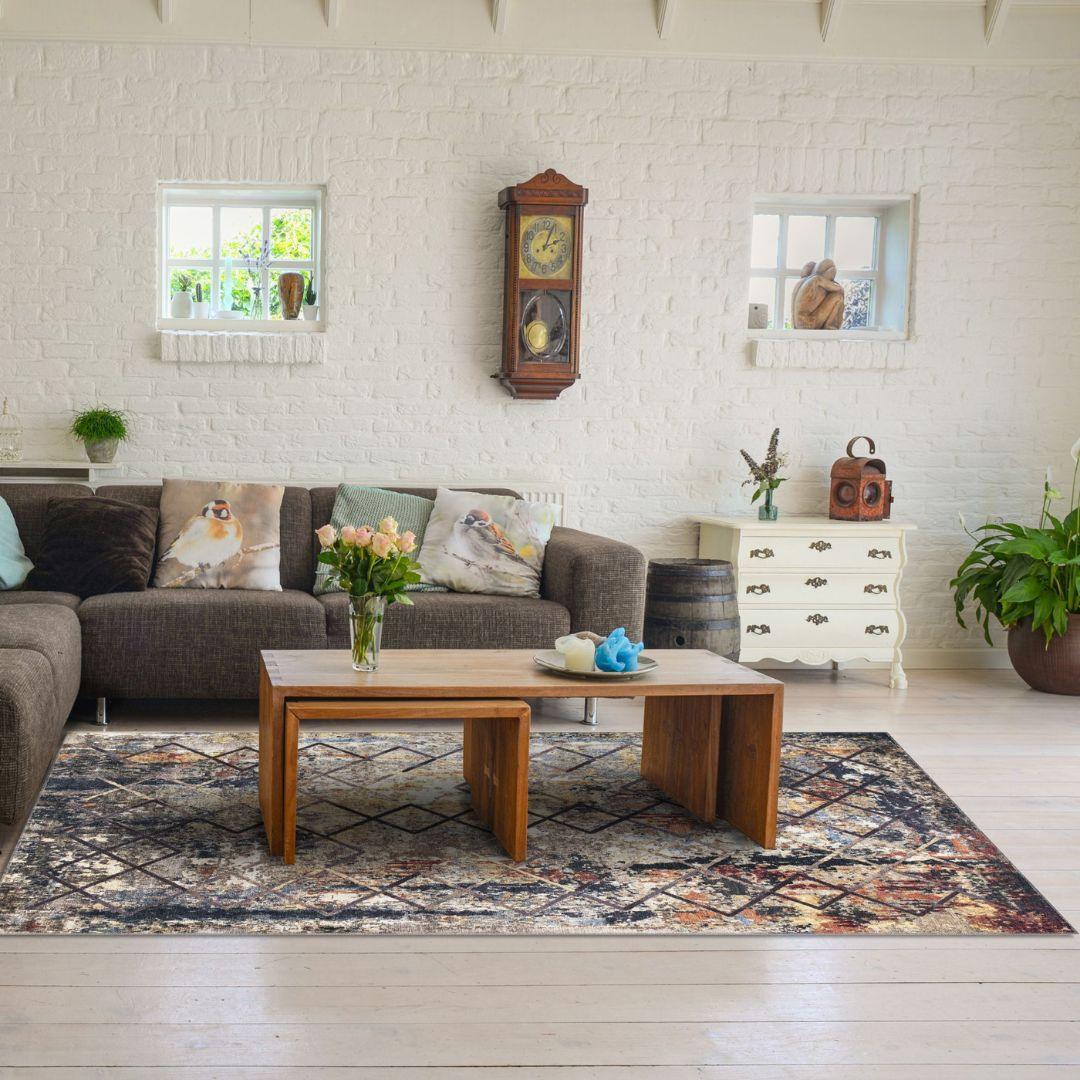


Yes, a washable rug is fine on vinyl, luxury vinyl plank or laminate — with one real caution. Certain rubber and latex rug backings can react with vinyl over time and leave a yellow or amber stain that does not come off. Choose a rug or pad the maker states is safe for vinyl, keep the floor dry underneath, and test a hidden corner before you commit.
Why some rug backings stain vinyl
Vinyl flooring is flexible because it contains plasticizers. Natural and synthetic rubber contains its own additives — antioxidants and antiozonants that stop the rubber perishing. Put the two in sealed contact for months and those compounds migrate into each other. The visible result is a yellow, amber or greyish shadow in the exact shape of whatever was lying there.
Three things about this catch people out:
- It is slow. Nothing happens for weeks. The stain often appears months after the rug went down, so the rug is rarely blamed.
- It is permanent. The discolouration is inside the wear layer, not on top of it. Cleaning does not touch it.
- It affects cheap and expensive floors alike. This is a chemistry issue, not a quality issue. Most vinyl flooring manufacturers warn about rubber-backed mats somewhere in their own care documentation — it is worth a two-minute look at yours.
The same warning is usually attached to rubber-backed bath mats and to the rubber feet on furniture, which is why you sometimes see four small stains under a chair.

Vinyl, LVP and laminate are not the same problem
These three get lumped together as “hard floor that is not wood,” but they fail in different ways.
| Floor | What it is | Main risk from a rug | What to do |
|---|---|---|---|
| Sheet vinyl | Soft PVC, high plasticizer content | Staining from rubber or latex — highest risk of the three | Felt or woven backing only |
| Luxury vinyl plank (LVP/LVT) | Rigid PVC core with a printed wear layer | Staining, plus dye transfer from a wet rug | Check maker guidance; test first |
| Laminate | Wood-fibre core with a laminated wear layer | Trapped moisture swelling the seams | Never lay a damp rug; keep the floor dry |
| Engineered or solid wood | Real timber with a finish coat | Finish clouding, uneven sun fading | See our hardwood guide below |
If your floor is real wood rather than vinyl, the failure mode is different again and we cover it separately in are washable rugs safe for hardwood floors.
The laminate problem nobody mentions: putting a washed rug back too early
This one is specific to washable rugs, and it is the risk we would actually worry about in a normal home.
Laminate is a wood-fibre board with a decorative layer bonded on top. The surface is water-resistant; the core is not. Water that sits along a seam wicks into the board, and the board swells. Once a laminate plank has swollen at the edge it stays swollen — the only fix is replacing the plank.
A washable rug that comes out of the machine feeling “nearly dry” and goes straight back down is the perfect way to cause this. The rug traps what is left of the moisture against a seam for a day, and nothing looks wrong until the edge lifts weeks later. Let the rug dry completely, flat and off the floor, before it goes back. Our guide to putting a washable rug in the dryer covers how to speed that up safely.
The same applies to spills. Blot the rug and lift it to check what got through to the floor underneath.
Which backing is safe
| Backing | On vinyl | Notes |
|---|---|---|
| Woven fabric or cotton canvas | Safe | No reactive chemistry; may need a pad for grip |
| Needle-punched felt | Safe | The safest pad option; adds cushioning too |
| Coated TPR / polyurethane dots | Usually safe | Common on washable rugs; confirm with the maker |
| Natural rubber | Test first | Better than synthetic latex, but still worth a patch test |
| Synthetic latex or PVC foam waffle | Avoid | The classic cause of yellow shadow stains; also crumbles with age |
| Adhesive or sticky-grip pads | Avoid | Residue lifts the wear layer when you pull it up |
If the rug you want has a backing you are unsure about, the fix is simple: put a felt pad between the rug and the floor. The pad becomes the only thing touching the vinyl, and it also solves grip. Which pad to pick is covered in do you need a rug pad for a washable rug.

Test it before you cover the whole room
Four weeks of patience is cheaper than replacing a floor. The test is simple:
- Pick a hidden spot — under a sofa, inside a closet doorway, behind a door. Somewhere that stays covered permanently, so a reaction never shows.
- Lay a small piece of the backing down face down on the clean, dry floor, weighted with a book so it sits in full contact.
- Leave it at least four weeks. A 24-hour test tells you nothing — this reaction is slow. Eight weeks is better, and a warm room shows it sooner than a cold one.
- Lift and compare the covered patch with the floor next to it in daylight. Any yellow, amber or grey shadow means that backing should not be used on that floor.
While the rug is down, lift and check it every few months anyway. That habit catches staining, trapped damp and grit early, and it is the same routine that keeps the rug itself lasting — see how long washable rugs last.
Slipping is the other half of the question
Vinyl and laminate are smoother than wood and much smoother than tile grout, so a rug that sat still on floorboards can skate on LVP. A thin flatweave is the worst offender because there is not enough weight to hold it.
A felt-and-natural-rubber pad cut two inches smaller than the rug on each side solves grip and floor safety in one purchase. The other fixes — furniture on the corners, silicone beads, corner grippers — are laid out in how to stop a rug from slipping, and if the rug is going over carpet instead, keeping a rug from moving on carpet is the version for that.
The Arconiz angle
We work directly with the mills in Turkey that weave our rugs, with no middleman, and the honest answer we give customers with vinyl or laminate floors is the same one above: our washable rugs are low pile with a non-slip backing, they sit flat, and they are a good match for a hard floor — but no rug maker can tell you how a specific backing will behave against a specific brand of vinyl over two years. Check what your flooring manufacturer says, and run the patch test. We would rather say that than promise something we cannot test on your floor.
If you want to remove the variable entirely, put a felt pad underneath. It is the one option with no chemistry to worry about on any floor type.
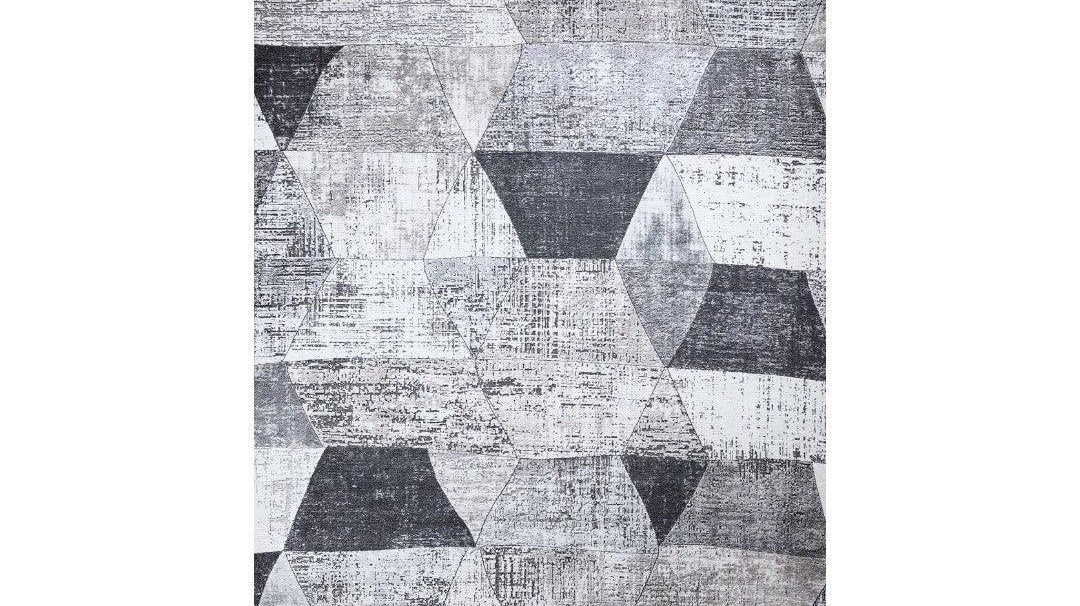
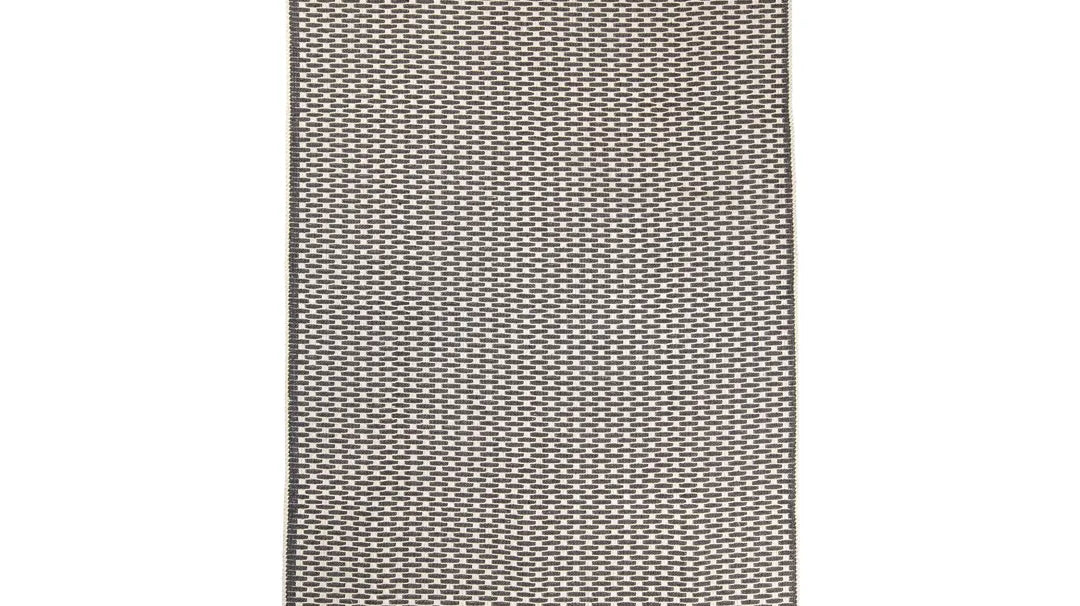
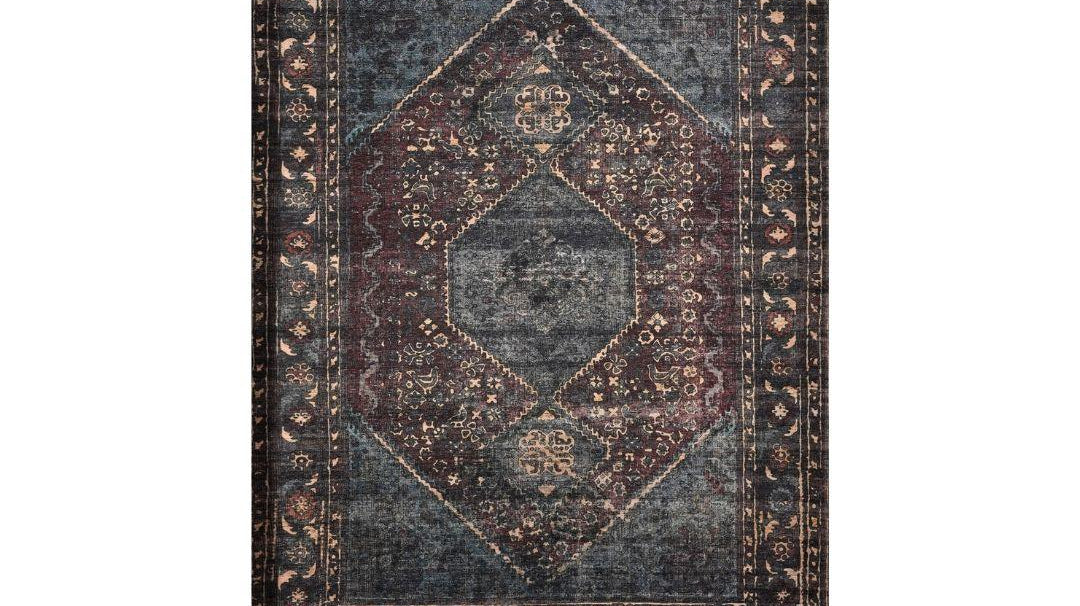
For hard floors we would start with a flatweave: the charcoal recycled-material rug or the navy blue washable rug both sit low enough that a door still clears them. The full range is in our machine washable rug collection, and if you are still deciding whether the format is right for you, are machine washable rugs worth it is our honest assessment.
Written by the Arconiz team. We source handwoven and machine washable rugs directly from manufacturers in Turkey and test every care instruction we publish on our own stock.