
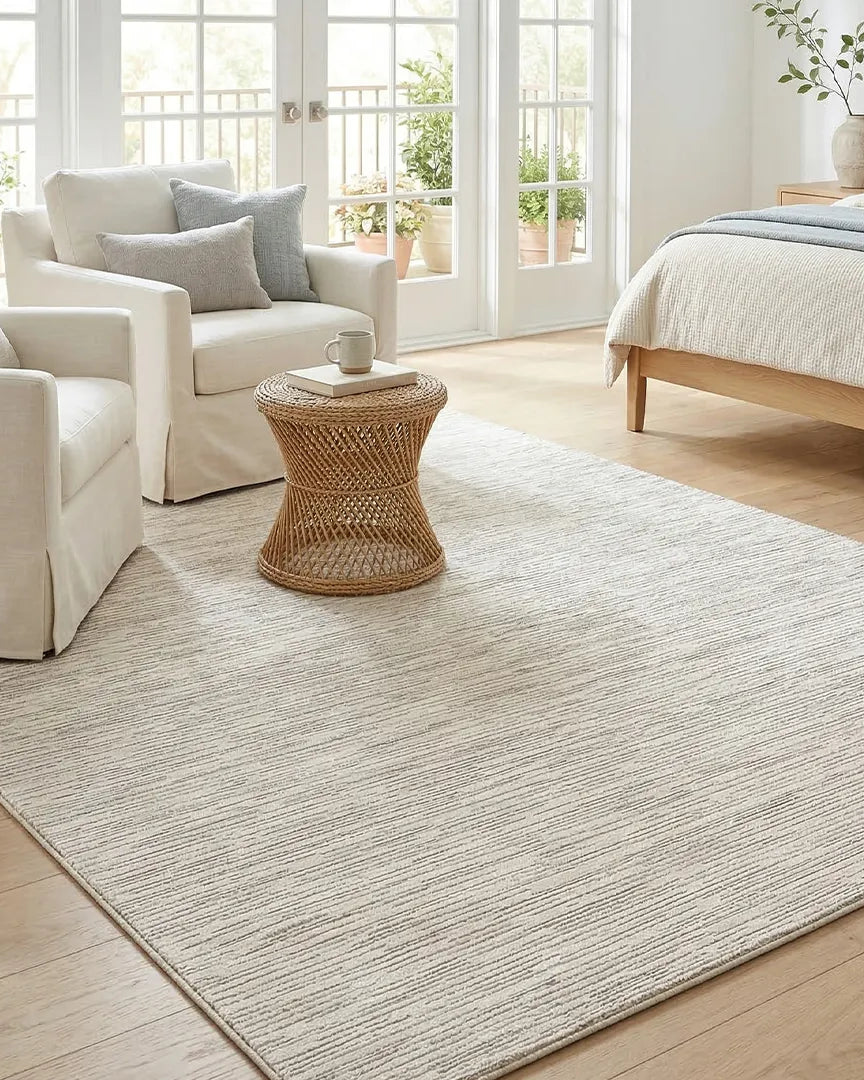



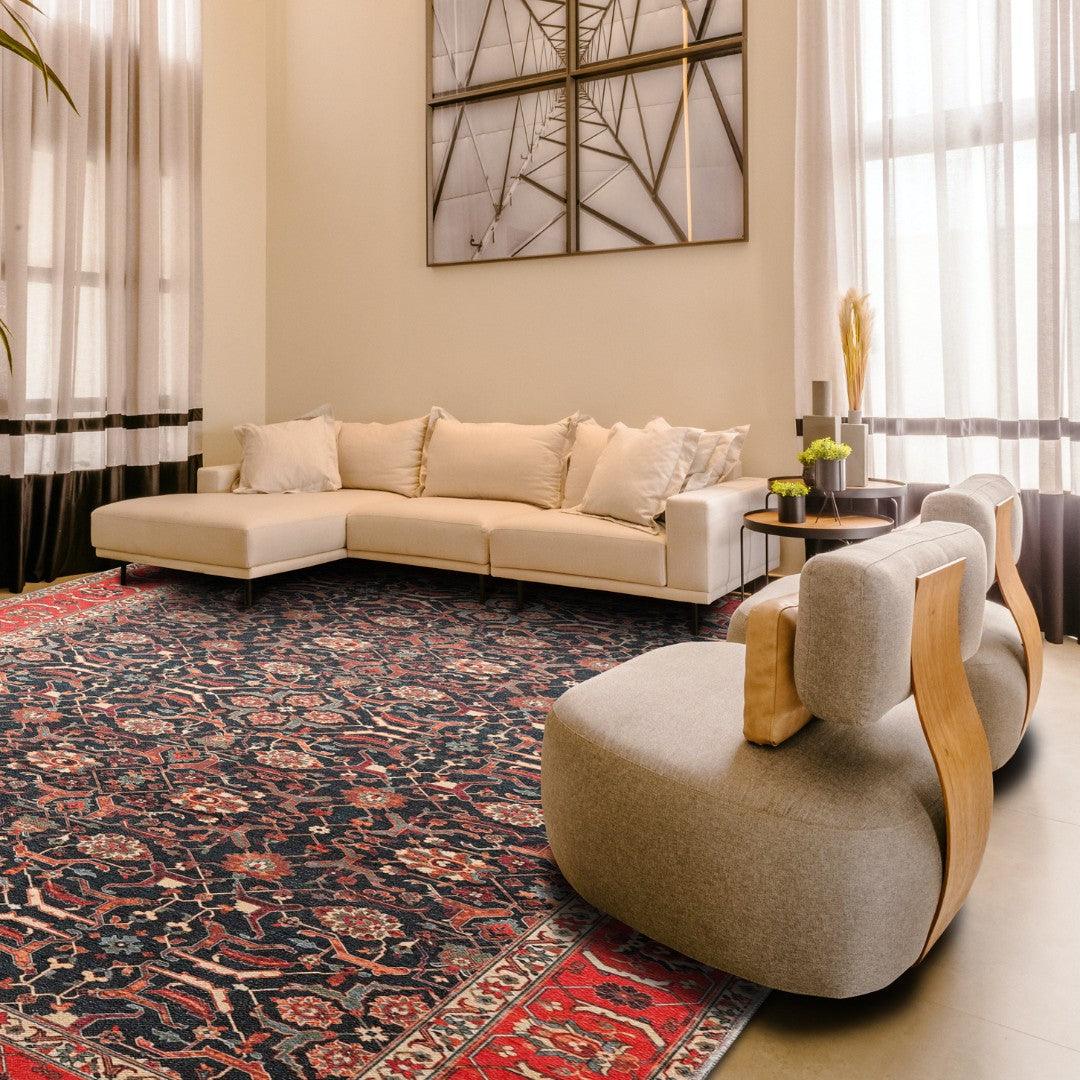


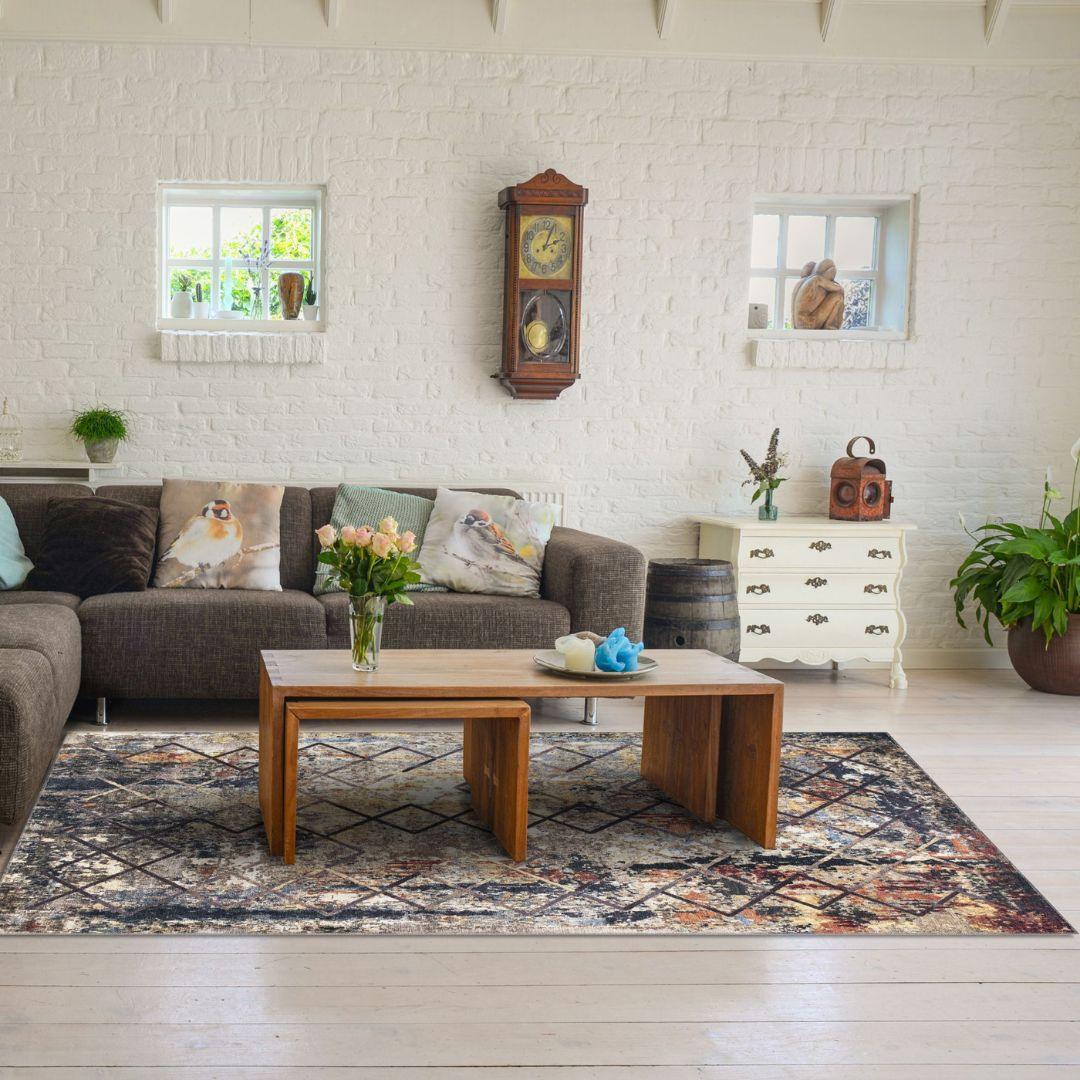



Washable rugs are one of the best floor coverings for a basement. A basement is the room most likely to get damp, and a low-pile rug you can lift, wash and dry is far easier to recover from a leak or a musty spell than fitted carpet, which usually has to be torn out. The key is low pile, a breathable pad, and a dry floor underneath.
Why basements are hard on rugs
Three things make a basement different from every other room in the house, and they all point the same way.
Concrete holds and releases moisture. Even a sealed slab passes water vapour upwards. Anything sitting flat against it with a waterproof back traps that vapour, and trapped vapour is exactly how mildew starts.
The air is cooler and damper. Warm household air hitting cool basement surfaces condenses. That is why basements smell musty in summer even when nothing has leaked.
Things go wrong down there. Water heaters, washing machines, sump pumps and the occasional storm. Not often, but often enough that permanently fixed carpet is a genuine risk.
A washable rug answers all three, because the worst-case scenario is a wash cycle rather than a replacement.
Washable rug vs the alternatives
| Option | After a leak | Musty smell | Verdict |
|---|---|---|---|
| Machine washable rug | Lift, wash, dry, put back | Washes out completely | Best all-round choice |
| Wall-to-wall carpet | Usually replaced | Very hard to remove | High risk downstairs |
| Traditional wool rug | Professional cleaning | Wool holds odour | Costly to recover |
| Bare concrete or vinyl | Mop and go | None | Safest but cold and loud |
The honest summary is that bare floor is the lowest-risk option and a washable rug is the best compromise between risk and a room you actually want to sit in.

Five rules for a rug in a basement
- Fix the moisture first. No rug solves a damp problem. If the slab is wet, sort the drainage, sealing or humidity before you put anything on it.
- Keep humidity under about 60 percent. A dehumidifier does more for a basement rug than any rug specification does. Mildew needs sustained damp, not an occasional splash.
- Choose a breathable pad. Open-weave or felt pads let vapour move. A solid rubber pad on concrete can trap moisture against the slab.
- Go low pile. Thin dries in hours. Thick dries in days, and a rug that stays damp for days is the actual problem.
- Lift it occasionally. Every couple of months, roll the rug back and check the floor underneath. Two minutes that will tell you about a problem long before you smell it.
What size, and can you wash it at home?
This is the practical constraint people forget. A basement family room usually wants a big rug, and a big rug is not going in a domestic washer.
Our rough rule: 2x3 through 3x5 washes in any machine, 5x7 needs a large-capacity drum, and anything 8x10 or larger is a laundromat job. If the whole point of the rug is that you can wash it after a damp spell, that matters. A practical answer for a large basement is two or three smaller washable rugs zoning the space rather than one huge one - seating area, stairs landing, under the desk. Each one goes in the machine on its own, and you are never carrying a soaked 8x10 up a flight of stairs.
Full detail is in what size washer you need for a washable rug, and our living room rug size guide works just as well for a basement lounge.

Colour and pattern for a low-light room
Basements have less natural light, so two things follow. Mid-tone and darker patterns hide the grit that gets tracked down from the rest of the house, and a busy pattern hides an uneven concrete slab far better than a plain colour, which shows every dip. Very pale rugs look striking in photographs and disappointing in a real basement within a month.
Distressed and geometric designs work particularly well here for both reasons. If the basement doubles as a playroom or a home gym, treat it like a high-traffic room: our notes on washable rugs for pets apply to kids and equipment just as directly.
The Arconiz angle
We work directly with the mills in Turkey that weave our rugs, with no middleman, which is how we keep a 5x7 washable rug under $200. That price point matters more in a basement than anywhere else in the house - you want a rug you would not be devastated to lose, and one you will genuinely put through the wash rather than baby.
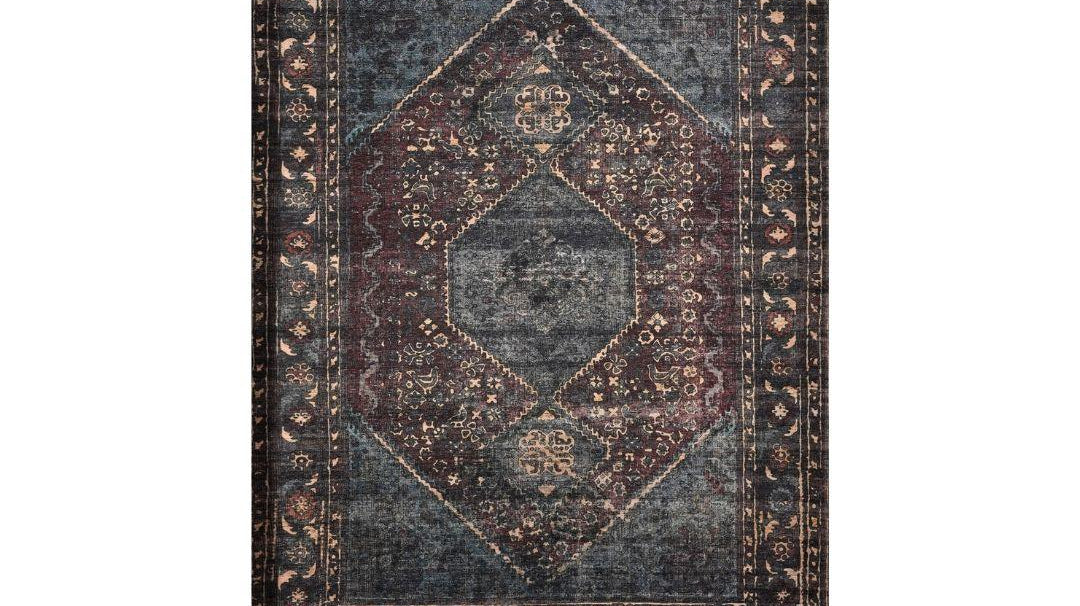
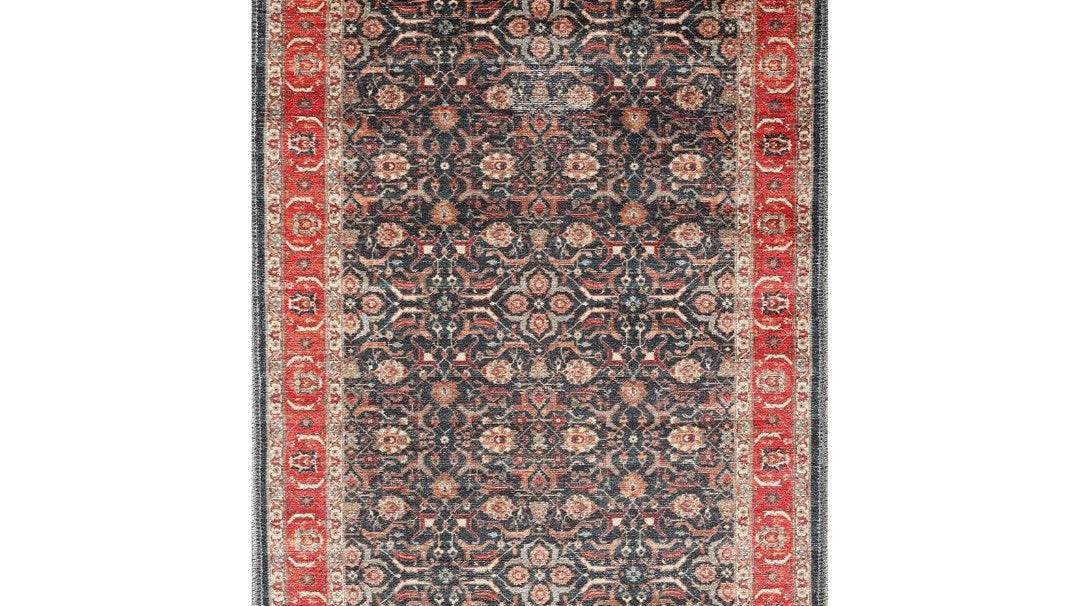
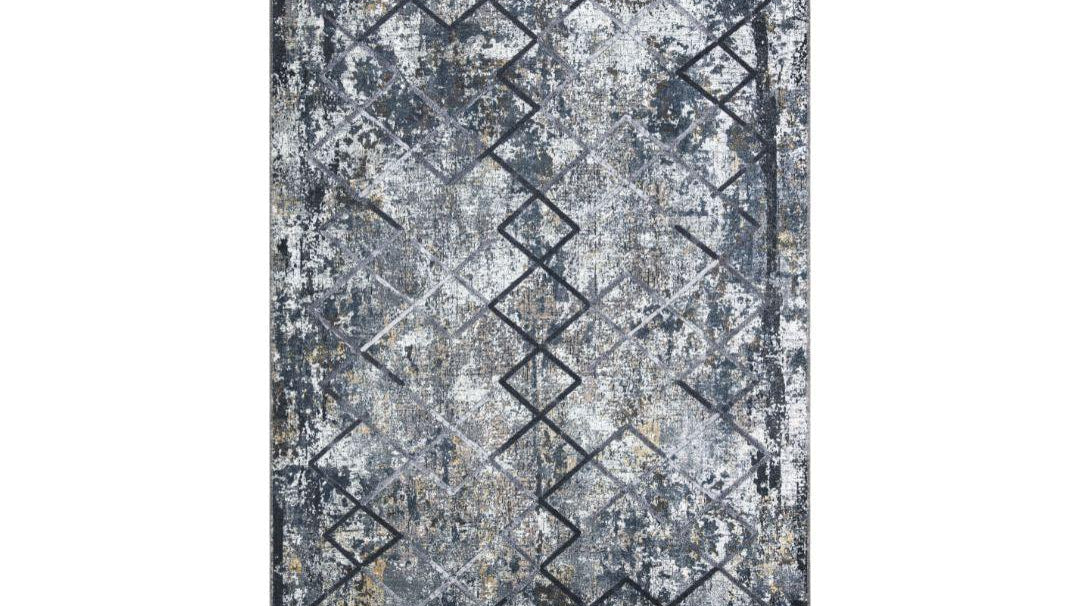
Our machine washable range is low pile, made from recycled fibre, with a non-slip backing that holds on a smooth concrete or vinyl basement floor. The blue-gray distressed washable rug and the burgundy and yellow washable rug both hide traffic well in low light, and both come in sizes small enough to wash at home. The full range is in our washable rug collection.
If you are still deciding whether washable is the right format at all, are machine washable rugs worth it lays out both sides, and do you need a rug pad for a washable rug covers the pad question that matters so much on concrete.
Written by the Arconiz team. We source handwoven and machine washable rugs directly from manufacturers in Turkey. If your basement has an active water problem, deal with the cause before adding any floor covering.