







Rugs pill when short or loose fibres rub together under foot traffic and tangle into small fuzz balls. It is normal and not a defect. Vacuum without a beater bar, then trim the pills with a battery fabric shaver or small scissors rather than pulling them. Rotate the rug and wash it gently to keep them from returning.
What is rug pilling, and why does it happen?
A pill is a small knot of fibre that sits on the surface of a rug. It forms in three steps. A loose or short fibre works its way up out of the weave. Friction from feet, furniture, a vacuum or the washing machine rubs it against its neighbours. The loose end tangles into a ball, which stays attached to the rug by the fibre it came from.
That attachment is why pills do not simply fall off like lint, and why pulling one is a mistake: you tug a loose fibre out of the weave, which gives the next pill something to form on.
| Cause | Why it creates pills | Fix |
|---|---|---|
| New rug with loose surface fibres | Short ends work loose in the first weeks | Trim, vacuum gently, wait |
| Heavy foot traffic | Constant friction in one path | Rotate the rug |
| Beater-bar vacuum | Pulls fibres up, then tangles them | Suction only or brush roll off |
| Furniture sliding on it | Rubs one patch repeatedly | Felt pads on furniture |
| Rough washing or hot drying | Agitation and heat roughen the surface | Cold, gentle, air dry |
Pilling versus shedding: they are not the same thing
People often use the two words interchangeably, and the fix differs. Shedding is loose fibre coming away from the rug as lint on the floor, and it tends to be worst in the first weeks. Pilling is loose fibre that stays on the rug as little balls. A rug can do both at once. If your problem is fluff on the floor rather than balls on the surface, do washable rugs shed is the better read.

Step by step: how to remove pills from a rug
This takes about half an hour for a large rug and is safe for most low-pile and flat-weave rugs. Test a hidden corner first.
- Vacuum the rug without a beater bar. Use suction only, or switch the brush roll off. Vacuuming rugs the right way explains why this matters.
- Do not pull the pills. Pulling tugs loose the surrounding fibres and makes more of them.
- Trim them with a fabric shaver. A battery de-piller, held flat and moved lightly across the surface, takes them off cleanly. Do not press down.
- Snip the stubborn ones. Small, sharp scissors, cutting at the base of the pill and not into the weave.
- Vacuum again. Collect the trimmed pills and loose fibres.
- Prevent a repeat. Rotate the rug, vacuum gently, and wash it with care, as below.
If the rug has a backing, keep any shaver away from edges and seams, and never use a razor. A razor skims fibre but cuts the weave just as easily, and a cut cannot be undone.
Which methods work, and which to avoid
| Method | Verdict | Notes |
|---|---|---|
| Battery fabric shaver | Best | Fast and even; keep the head flat |
| Small scissors | Good | Slow but precise for a few pills |
| Pumice or de-pilling stone | Use with care | Can abrade the surface; test first |
| Lint roller or tape | Not useful | Picks up loose lint but not attached pills |
| Pulling with fingers | Avoid | Loosens more fibre and creates more pills |
| Razor | Avoid | Easy to cut the weave |
How to prevent a rug from pilling
You cannot make friction stop, but you can reduce how much loose fibre is available to tangle.
- Vacuum gently and regularly. Suction only on most low-pile rugs, so you remove loose fibre without dragging more up.
- Rotate the rug. A 180-degree turn every few months spreads wear so no single path takes all the friction.
- Use felt pads on furniture. Chair legs that slide across the rug are a common source of local pilling.
- Wash it cold and gentle. Agitation and heat roughen the surface. How to wash an area rug and what detergent to use on a washable rug cover the routine.
- Skip hot dryers. Heat and tumbling are rough on any surface. Whether a dryer is ever safe depends on the rug, which can you put a washable rug in the dryer works through.

Does pilling mean the rug is poor quality?
Not by itself. Almost every textile pills a little at the start of its life, from towels to jumpers, and rugs are no exception. What matters is what happens next. If the pilling fades after a few weeks of gentle care, it was loose-fibre run-in. If the surface keeps shedding and balling and the pile starts to thin, the rug is wearing out faster than it should.
Construction matters here too. A tight low pile or a flat weave, where fibres are woven in rather than standing up loose, gives friction less to work with than a deep or shaggy pile. How long a rug lasts overall depends on much more than pilling, which how long do washable rugs last covers honestly.
The Arconiz angle
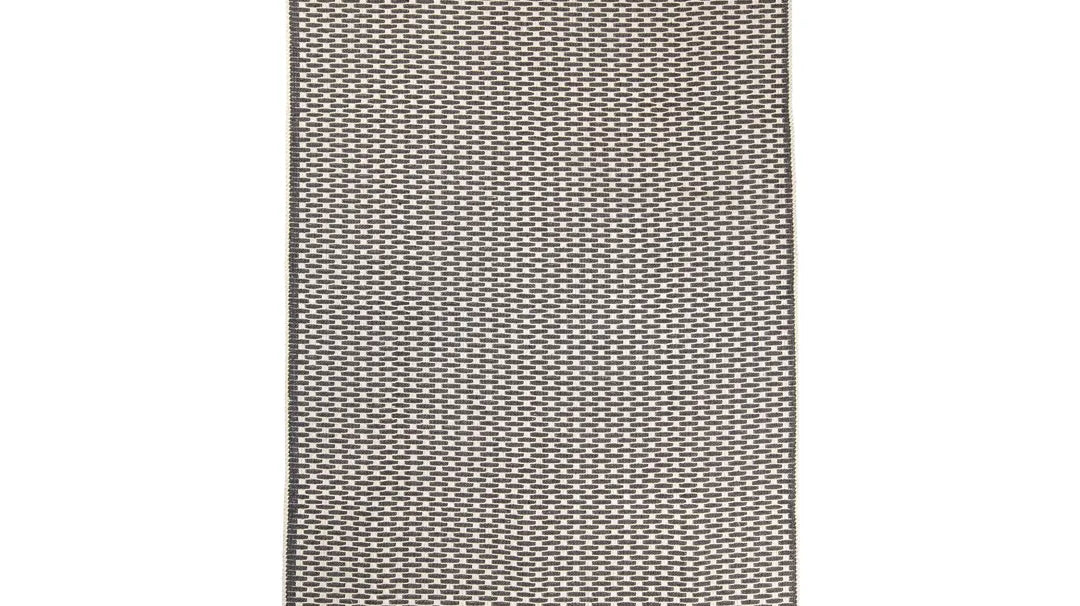
We buy directly from manufacturers in Turkey, and we would rather tell you what to expect than promise a rug will never pill. Some loose fibre in the first weeks is normal on almost any rug. Our newer flat-weave kilim washables, including the black geometric check rug, the pink classic stripe rug and the green geometric check rug, are woven flat, so there is no deep pile for fibres to tangle in.
The whole range is in our machine washable rug collection, and if you are still deciding whether the format suits you, are machine washable rugs worth it is where we weigh it up.
Written by the Arconiz team. We source handwoven and machine washable rugs directly from manufacturers in Turkey and test every care instruction we publish on our own stock.