







Woven wall art is textile art — a piece of woven cloth, usually a flat-woven kilim, displayed on the wall instead of the floor. Unlike a printed canvas, it brings real texture, handmade character and warmth to a room, and because each weaving is unique, no two pieces are ever the same.
- Woven wall art is handmade textile — kilim, tapestry or fibre art — hung as a focal point.
- It adds texture and warmth a flat print can't, and absorbs sound.
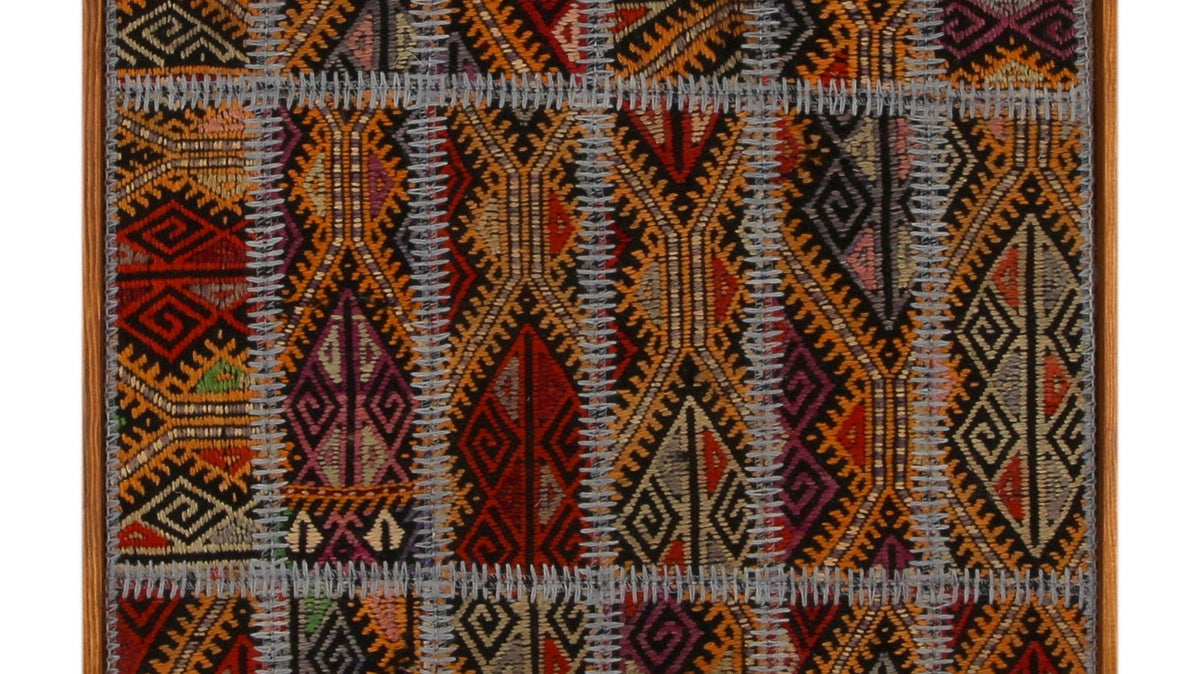
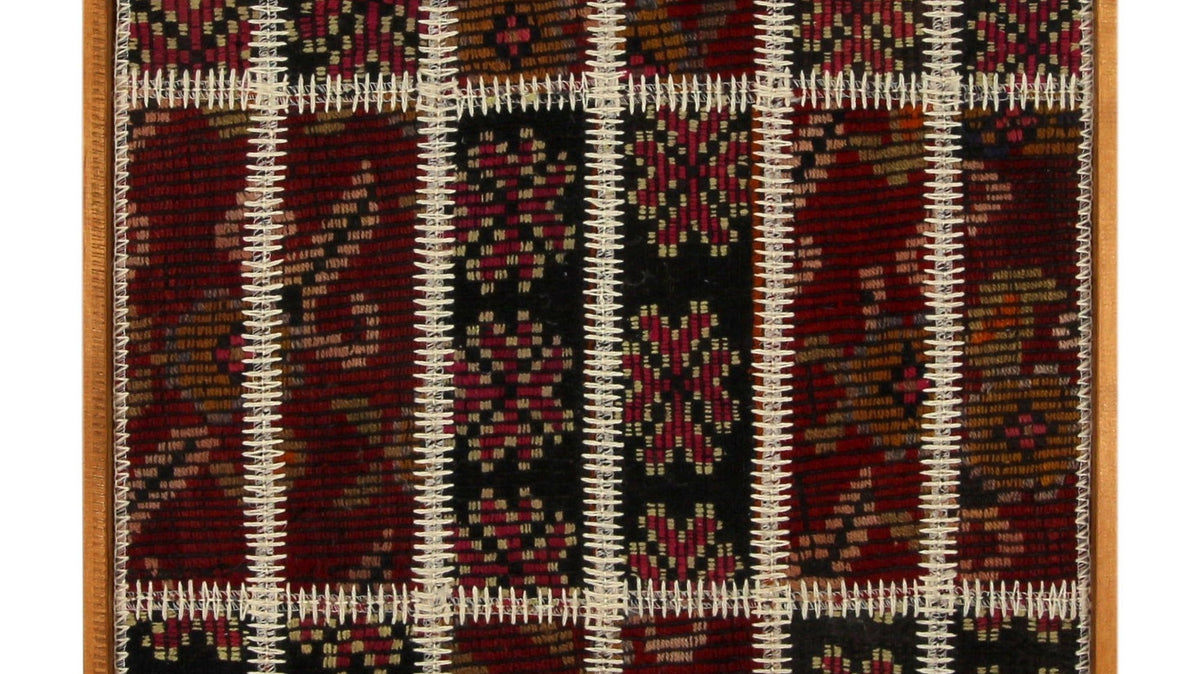
- Ours are reclaimed Anatolian kilim stretched on solid wood frames, ready to hang.
- Every piece is one-of-a-kind; prices run about $98–$255.
- Size it to the wall, hang it into a stud or anchor, and keep textile away from damp.

What counts as woven wall art?
Woven wall art covers any handmade textile displayed as art: flat-woven kilim panels, knotted tapestries, macrame, and mixed fibre art. What they share is that the image is built from thread and structure rather than printed onto a surface — so the piece has depth you can see and touch. Our focus is kilim: a pileless, flat-woven textile that reads beautifully flat against a wall.
Why choose woven wall art over a print
- Texture you can feel — hand-woven wool and cotton catch the light in a way a flat print never does.
- One of a kind — each piece is cut from a different vintage kilim, so yours is the only one.
- Warmth and softness — textile absorbs sound and takes the hard edge off modern rooms.
- A story — every weaving carries the motifs and wear of the Anatolian rug it came from.
- Longevity — wool is hard-wearing and ages gracefully, unlike a print that can fade flat.
Types of woven wall art
| Style | Best for |
|---|---|
| Patchwork / boho | Eclectic, layered, wabi-sabi interiors |
| Woven fish | Coastal, lake house, bathrooms |
| Tribal / bordered | Southwestern and ranch-style rooms |
| Folk motifs | Characterful entryways and studies |
How ours is made
Each piece starts as a reclaimed Anatolian kilim. A fragment is cut, assembled and stretched by hand over a solid wood frame, with hanging hardware fitted so it arrives ready to hang — no loose tapestry to wrestle onto the wall. It is woven and framed in Türkiye and ships from our Indianapolis warehouse. Because we start from genuine old kilims, you get real fading, real wear and real motifs — the marks of a textile that was once lived with. Curious about the weave itself? Read what kilim is and how it's made.
Which room suits woven wall art?
Living rooms take a large piece above the sofa as a focal point. Bedrooms suit calmer, tonal pieces above the headboard. Entryways make a strong first impression with a bold tribal weave. Bathrooms and coastal rooms love the woven fish designs — just keep textile out of direct splashes and steam. For a whole wall, group several pieces into a textile gallery wall.
How much does woven wall art cost?
Handmade woven art spans a wide range. Mass-market printed "tapestries" cost very little but look it; genuine artisan pieces from studios and galleries often run into the hundreds or thousands. Our framed kilim pieces sit in an accessible middle — roughly $98 for smaller 20x20 inch designs up to about $255 for large statement pieces — because we reclaim existing kilims rather than commissioning new weaving.
How to care for it
Woven wall art is low-maintenance: dust it gently with a soft brush or a vacuum on low with the upholstery tool, keep it out of prolonged direct sunlight to protect the colours, and avoid damp walls and steam. No framing glass means no glare — and nothing to clean.
Choosing and hanging your piece
Pick the size to suit the wall (our wall art size guide has the ratios), then hang it securely — framed textile has real weight, so see how to hang textile wall art. Want several pieces together? Try a textile gallery wall. When you're ready, browse the full woven wall art collection — and remember, when a piece sells it's gone for good.
Written by the Arconiz team. We work directly with Anatolian weavers — every piece is woven and framed in Türkiye.